See the jazz legend’s instrument in the United States / Canada Gallery
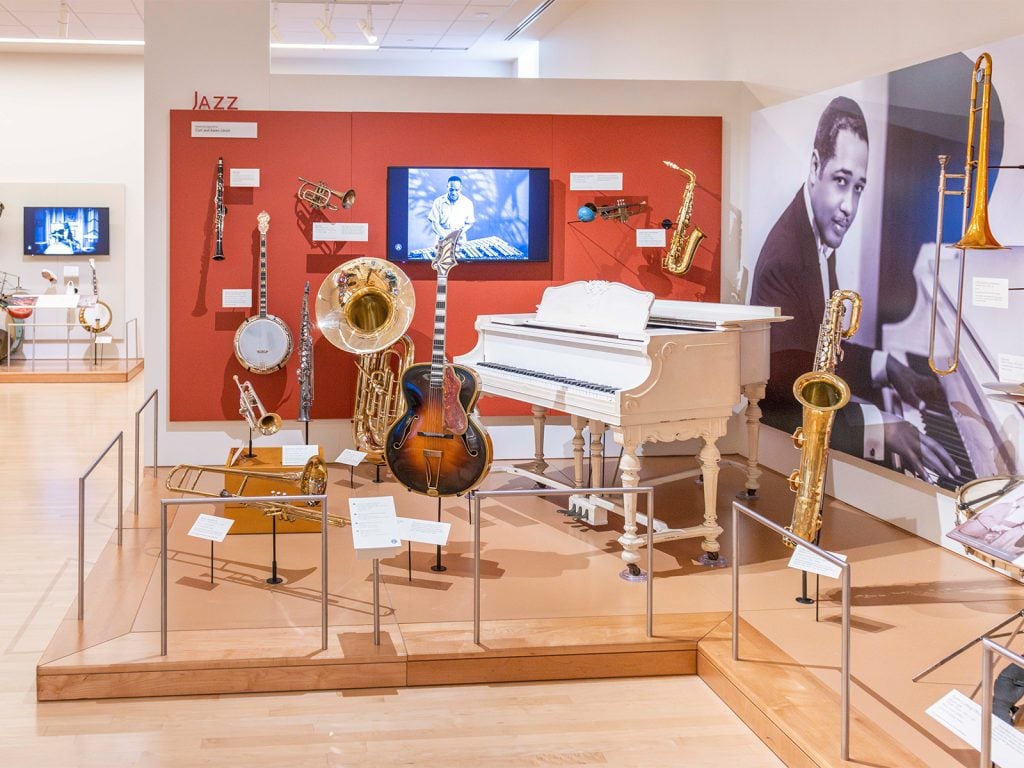
A historic jazz instrument is now on display in MIM’s redesigned Jazz exhibit: the personal piano of jazz legend Duke Ellington.
Ellington purchased the piano, a Kramer-branded baby grand likely made by Kelso & Company, in the late 1920s during the Harlem Renaissance, when his fame was growing and his orchestra performed at high-profile New York ballrooms such as the Cotton Club. He kept the piano in his home and composed some of his greatest hits on it. “Mood Indigo,” “Sophisticated Lady,” and “It Don’t Mean a Thing (If It Ain’t Got That Swing)” are among the enduring classics from that period.
“This is the piano from the old homestead where my mother, father, and whole family were,” Ellington said in 1957 on the television show Person to Person. “A lot of exciting things have come out of here, some of my most satisfying work.”
The elegant white piano offers guests an intimate connection with a jazz giant.

Baby grand piano, USA, c. 1918
Gift of the Robert J. Ulrich and Diane Sillik Fund
“We are ecstatic that MIM is now the home for Duke Ellington’s piano,” says Rich Walter, curator for United States / Canada. “It is hugely significant as the instrument he played when he was establishing an international legacy as one of the most impactful composers, bandleaders, and musical figures of the 20th century.”
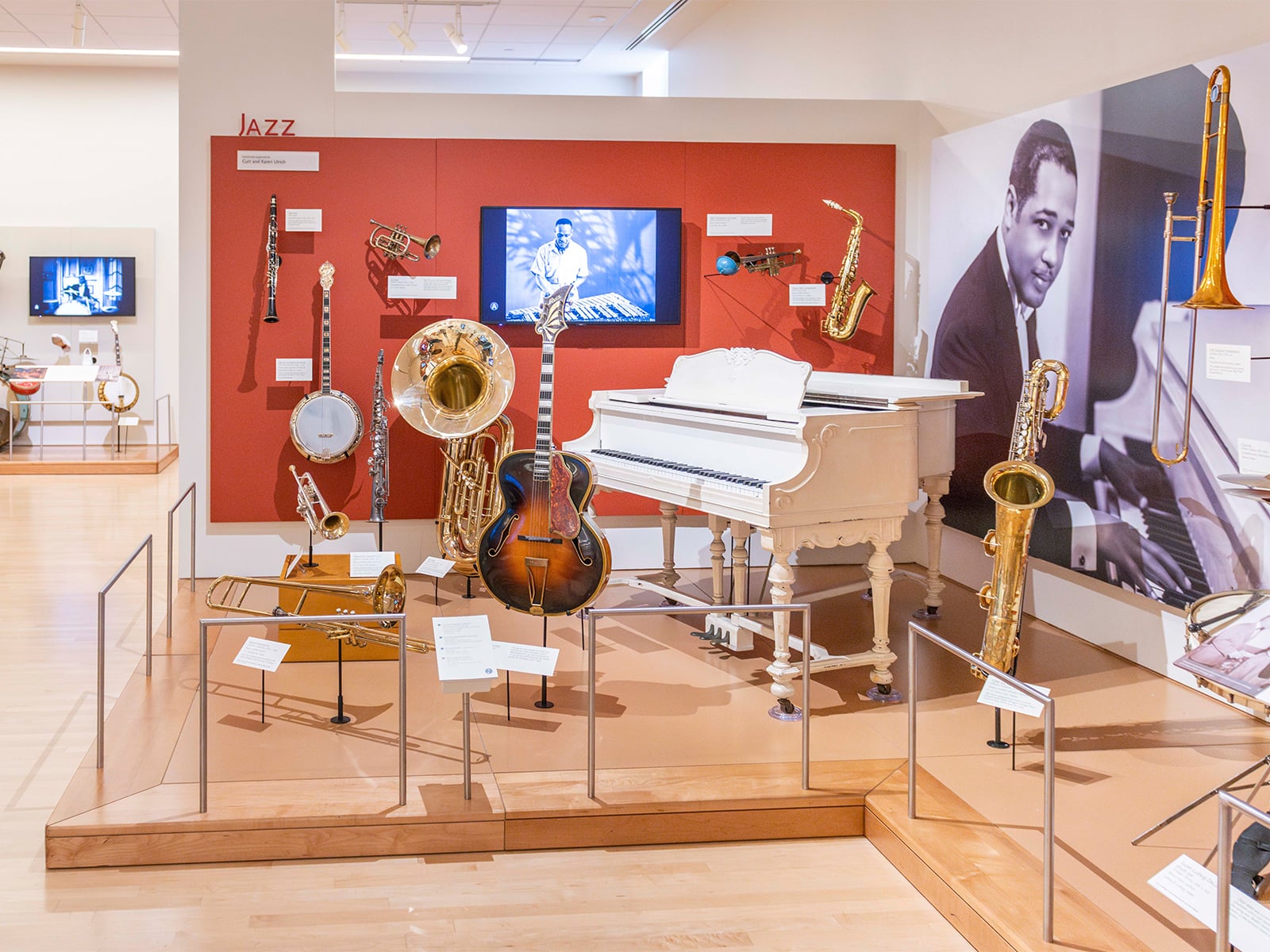
In the Jazz exhibit, which was redesigned and refreshed in March, Ellington’s career is further illustrated by instruments that brought his compositions to life, including a muted trumpet, baritone saxophone, and valve trombone. Next to the piano, guests can see the Levin De Luxe archtop guitar that Fred Guy played during his long tenure in the Duke Ellington Orchestra. Guy began performing with Ellington as a banjoist in 1925 and continued playing rhythm guitar for Ellington’s orchestra until 1949—a reflection of the loyalty many players felt toward Ellington and his music.

Duke Ellington performs with his orchestra in 1946.
“Ellington composed sophisticated music for an ensemble of skilled individual players with distinct musical voices,” Walter says. “His genius allowed all those individual voices to really shine as superstars.”
Together in the Jazz exhibit, Ellington’s piano and the instruments representing his orchestra help tell one of the most profound stories in American music, inviting guests to consider how Ellington’s musical innovation and his orchestra’s impact shaped the history of jazz.