
Throughout MIM’s Geographic Galleries, you’ll see, hear, and experience musical traditions from all around the world. Thousands of instruments across hundreds of exhibits—such as a 6,000-year-old Chinese paigu drum (MIM’s oldest object), iconic jazz pianist and composer Duke Ellington’s grand piano, and many more—allow for a world of discovery at MIM.
Africa Gallery
MIM’s Africa Gallery highlights the largest and most comprehensive assortment of African instruments in any museum by featuring more than 500 instruments and objects in more than 50 exhibits, offering an immersive view into musical traditions of the wide variety of peoples in sub-Saharan Africa.
Featured Exhibits
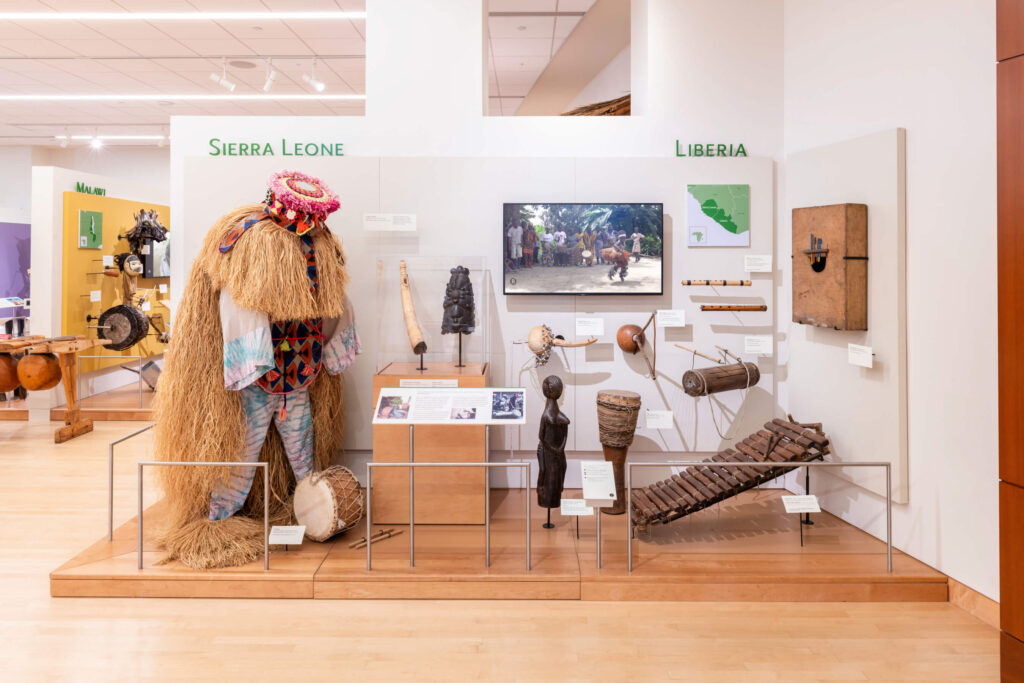
Sierra Leone and Liberia
The Sierra Leone and Liberia exhibits feature a full-bodied Mende goboi masquerade character and an accompanying drum, introducing the theme of ceremonial life, where performance, music, and dance, aided by spirits, are ways to share community values.
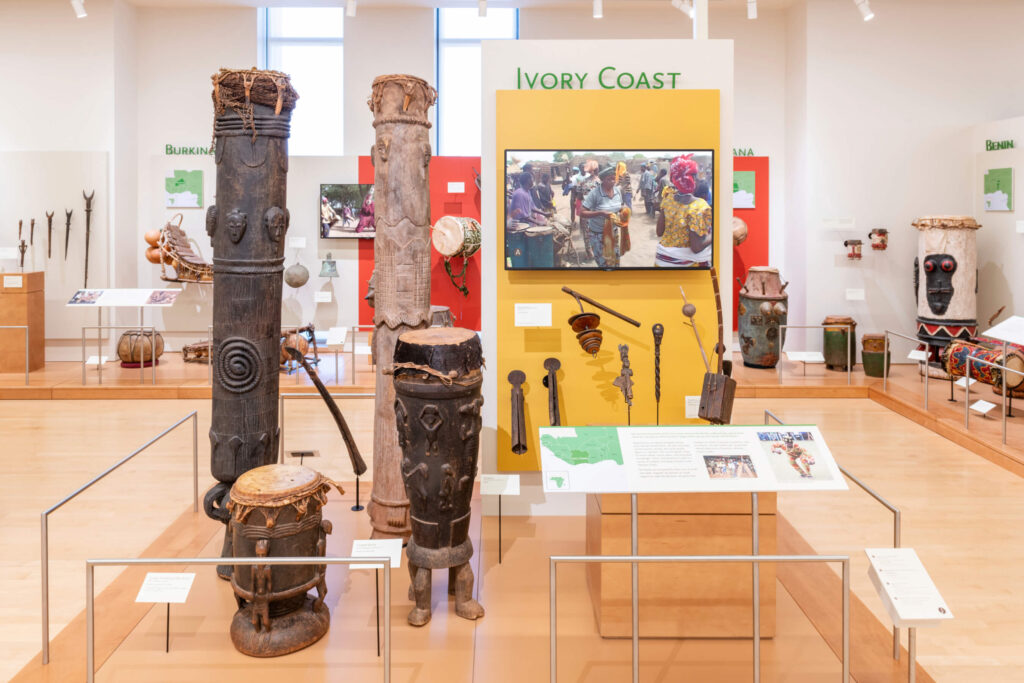
Ivory Coast
MIM’s Ivory Coast exhibit features instruments made by the Baule and Senufo, two of the largest ethnic groups in Ivory Coast. The Baule make some of Africa’s tallest drums; the tallest on display are almost seven feet tall.
Nigeria
Highlights of the Nigeria exhibit include large figuratively carved drums that visually articulate scenes of Yorùbá royal life and altarpiece drums dedicated to the Yorùbá deities Èşhù, a trickster god, and Ìbejì, a pair of divine twins.
Tanzania
Tanzania’s traditions are influenced by centuries of trade via the Indian Ocean, with various music styles anchored in Zanzibar and the nation’s coastal areas. MIM’s Tanzania exhibit focuses on several ethnic groups with shared but distinct instruments.
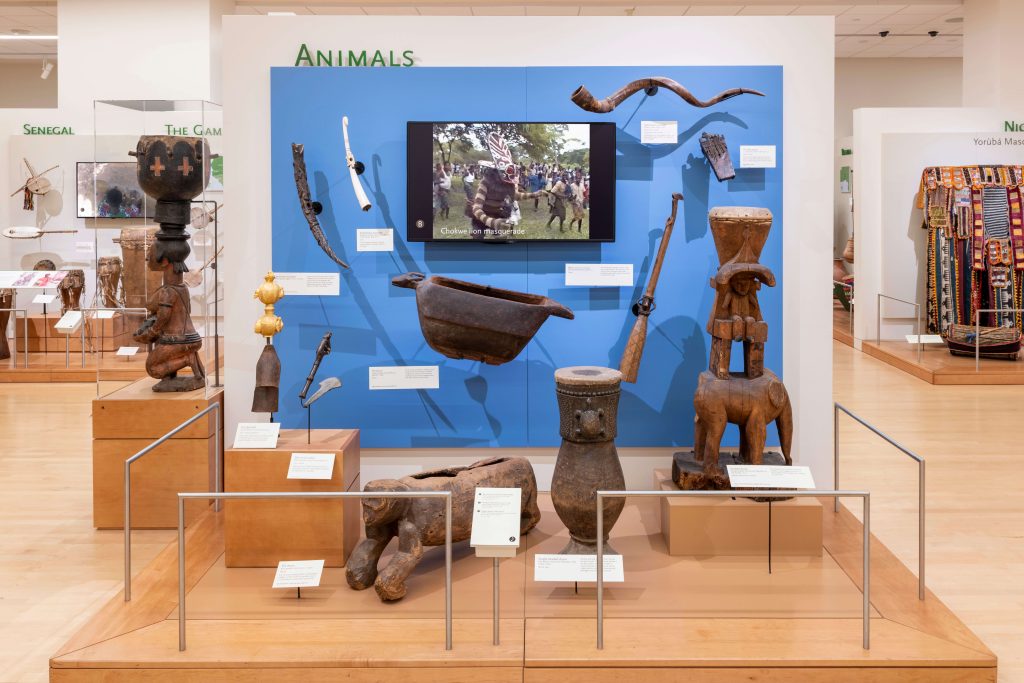
Animals
The instruments in this thematic display are carved in animal forms or include zoomorphic details. They introduce concepts of meaning and symbolism associated with instruments across Africa.
Democratic Republic of the Congo
The largest area of related exhibits in MIM’s Africa Gallery is dedicated to the Democratic Republic of the Congo and displays royal and ritual instruments representing more than two hundred ethnic groups.
Object Highlights
Chisanji, Chokwe people, Angola, c. 1890
For centuries, the thumb piano has been a preferred instrument of storytellers, historians, and ritual experts throughout Africa. A coin, brass tacks, and wire inlays add to the instrument’s aesthetic and textural qualities. MIM Collection Thumb Pianos Exhibit
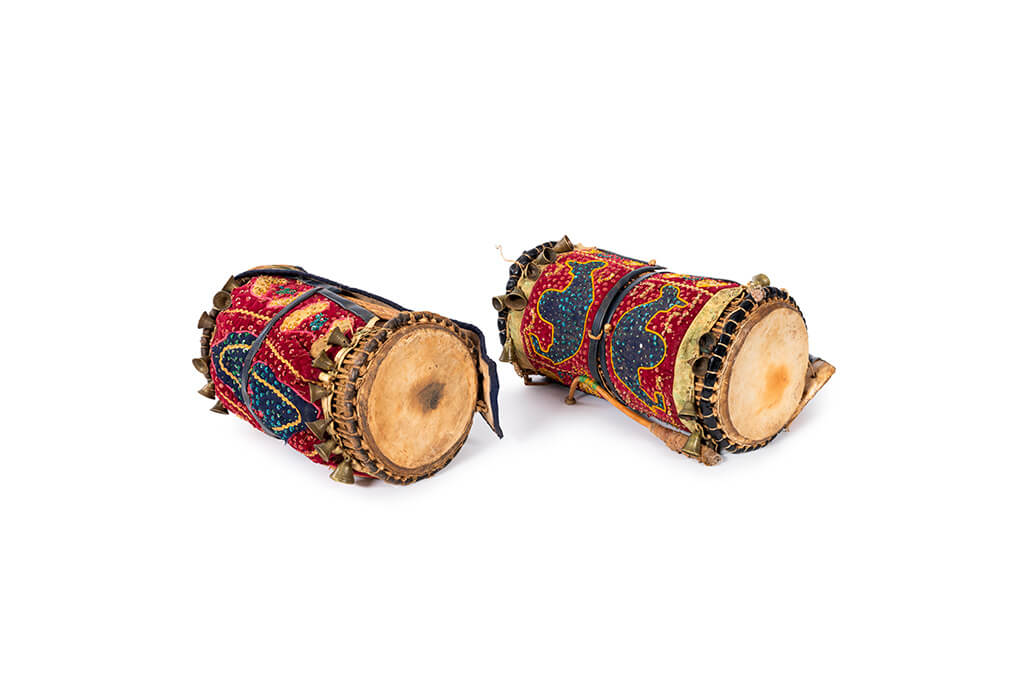
Dundun, Anago people, Benin, mid-20th c.
These dundun “talking drums” are part of a set; the larger one, a yahilu, is the lead or “mother drum.” Drum sounds signal or emphasize actions and support festive social and ritual events. They are also performed in “talking mode” to reflect tonal discourse based on human speech. MIM Collection Benin Exhibit
Seto, Ngbaka people, Central African Republic, late 19th c.
These quality traditional harps are intimate instruments created to provide melodic accompaniment to chief court praise singers. The choice of materials and design approach support the instrument’s sound qualities as well as its role as a culturally significant status art object. MIM Collection Gift of the Robert J. Ulrich and Diane Sillik Fund and Marc Leo Felix African Art Exhibit
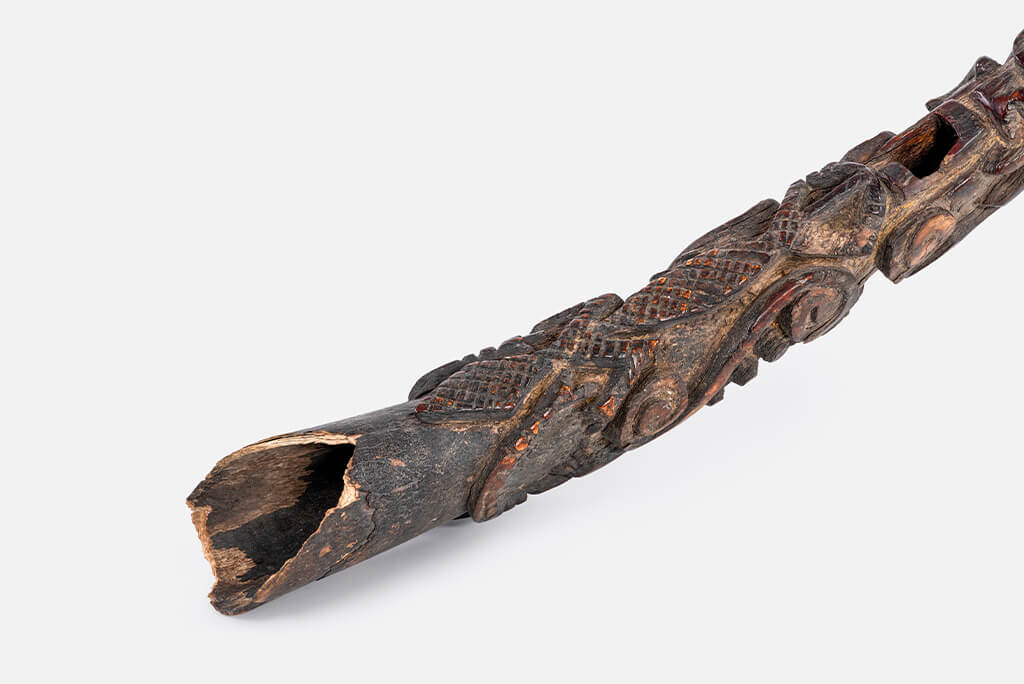
Side-blown trumpet, Urhobo people, Nigeria, 18th c.
This side-blown trumpet features deeply carved symbols, including spirals, lizards, and crocodiles, that extend down the instrument’s body. Its mouthpiece is carved near the midpoint on the tusk’s inner curve. MIM Collection Gift of the Robert J. Ulrich and Diane Sillik Fund Animals Exhibit
Ndibu, Kongo people, Democratic Republic of the Congo, 1870s
Ndibu bells are rung by diviners to call upon spirits involved with nkisi power figures in problem solving. The bells are attached to a seed pod rattle and an antelope horn with ritual materials, creating an instrument ensemble of exponential power to get the attention of an influential spirit. MIM Collection Gift of the Robert J. Ulrich and Diane Sillik Fund Democratic Republic of the Congo Exhibit
Figurative drum, Vuvi people, Gabon, c. 1930
This drum’s sculptural qualities are accented artistically by the application of pigments and the addition of details that match the body painting and dress materials worn by initiates of the Bwiti spiritual association. The Bwiti engage people in the exploration of the self, healing, and a shared sense of community. MIM Collection Gift of the Robert J. Ulrich and Diane Sillik Fund Gabon | Republic of the Congo Exhibit
Video Highlights Throughout the Galleries
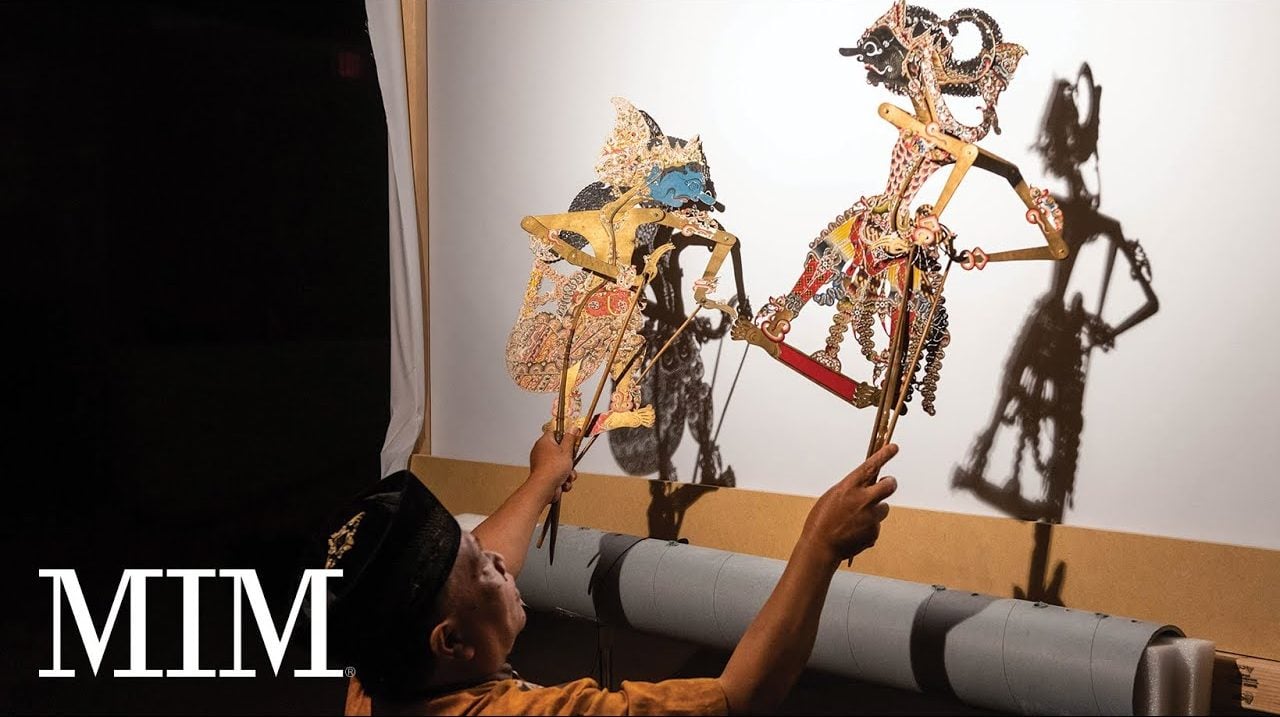
Wayang Kulit at MIM’s Indonesia: Gamelan Exhibit
The Totem Pole and Box Drum in MIM’s Northwest Coast Exhibit
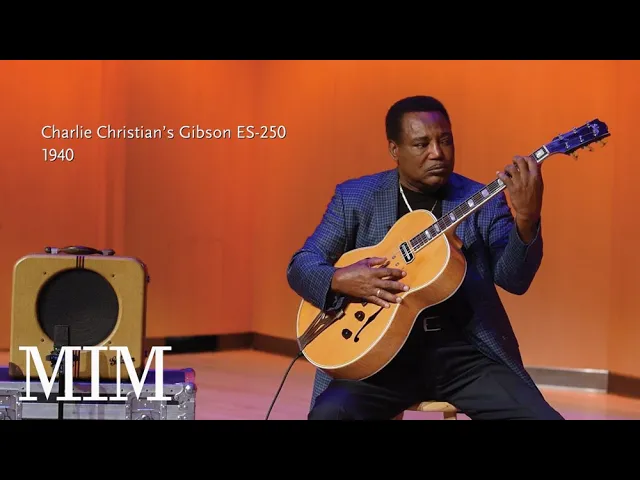
George Benson Plays Charlie Christian’s 1940 Gibson ES-250