

Unearthed Musical Masterpieces from the Southern Kingdoms of Ancient China
Explore one of the most extraordinary musical traditions of the ancient world.
- November 6, 2026–September 5, 2027
Special exhibition tickets sold separately from general admission.
Exquisite Musical Treasures
Experience the resounding splendor of long-buried musical treasures in Unearthed Musical Masterpieces from the Southern Kingdoms of Ancient China. Organized by MIM and the Hubei Provincial Museum under the guidance of the National Cultural Heritage Administration of China, this landmark exhibition presents an unprecedented collection of more than 70 ancient musical instruments and associated objects, including 40 objects never before seen in the United States and 10 Grade One Cultural Relics—China’s highest designation for national treasures.
See more than 40 of the 70-plus ancient Chinese masterpieces on display for the first time in the United States—exclusively at MIM.
From the Tombs of Nobility
Explore a richly preserved musical world revealed through stunning archaeological discoveries that trace the development of musical culture from Neolithic China to the pinnacle of ancient Chinese court music. Discover rare and magnificent instruments entombed with nobility for thousands of years, forgotten by history until their excavation brought to light one of the most sophisticated artistic traditions of the ancient world.
Left: This photograph shows bells in a Zeng tomb at Zaoshulin cemetery in Hubei Province. Many of the instruments featured were excavated from tombs of nobility.
Behold breathtaking instruments rarely seen outside of China, including 10 Grade One National Cultural Relics—China’s highest designation for national treasures.
Exclusively at MIM
See extraordinary musical treasures such as enormous inscribed bronze bells, spectacular ceremonial drums, and exceptional stone and bronze chimes alongside ancient artwork, armor, and ceremonial objects that illuminate the broader world the instruments were developed in. Immerse yourself in the stories and sounds of the instruments through audiovisual content—including excavation and performance footage provided by the Hubei Provincial Museum that brings the musical traditions of China’s ancient southern kingdoms to life.
Right: The bo bell of Marquis Kang of Zeng is ornamented with phoenix, cloud, and animal mask motifs and flattened flanges formed as pairs of tigers.
Featured Instruments
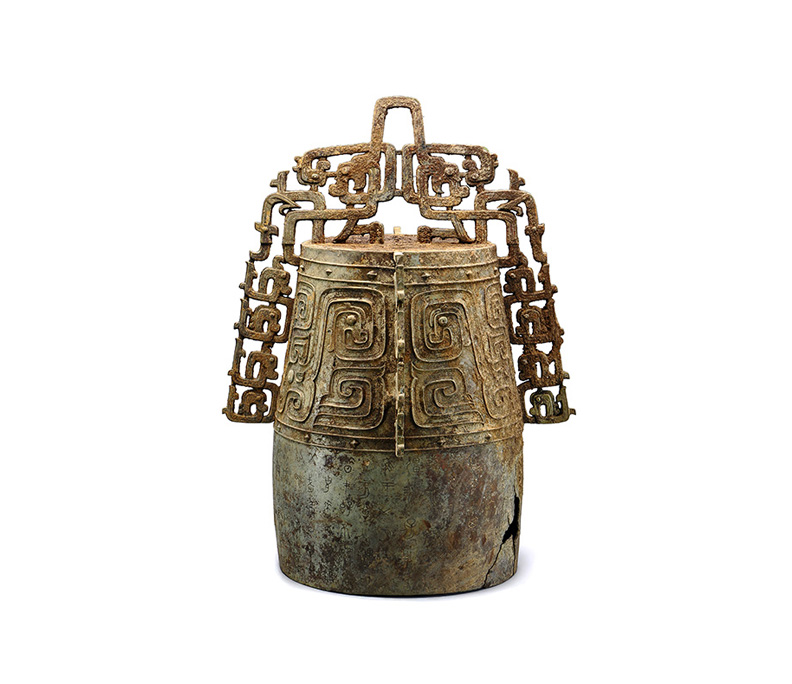
Bo bell of Marquis Qiu of Zeng, c. 650 BCE(approximately 2,700 years ago)
Middle Spring and Autumn period This magnificent bronze bo is the largest bell in the largest known set of bells from the Spring and Autumn period. Its body is decorated with intricately interlaced dragon flanges and paired dragons in relief on the upper half of the bell, and it features an inscription of 188 legible characters. Loan courtesy of the Suizhou Museum
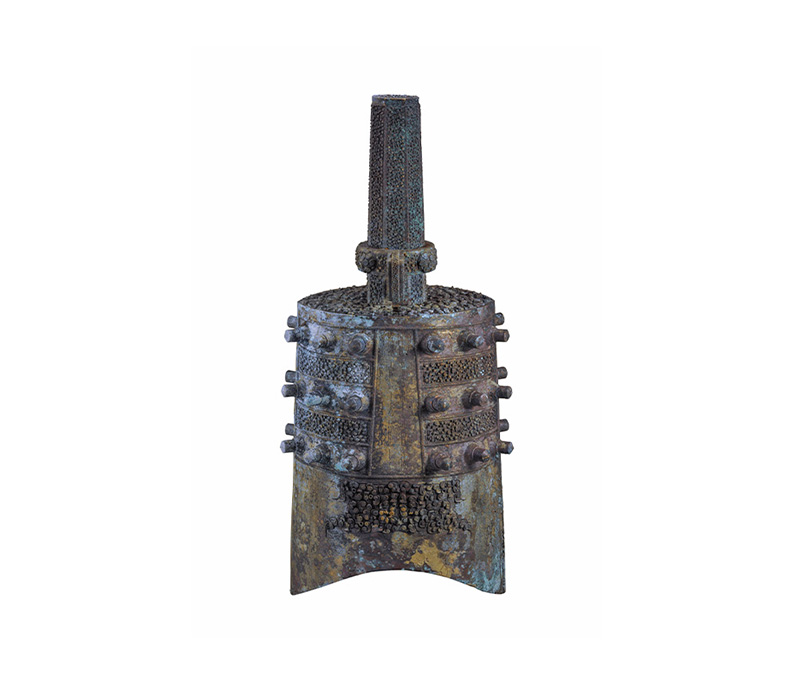
Yong bell of Marquis Yu of Zeng, c. 550–476 BCE(approximately 2,500–2,600 years ago)
Late Spring and Autumn period This monumental bronze yong is the largest of eight bells found in the tomb of Marquis Yu of Zeng. It is embellished with intricate coiled serpent motifs and a high-relief dragon design, and it features a 169-character inscription tracing the origins of the state of Zeng. Loan courtesy of the Suizhou Museum
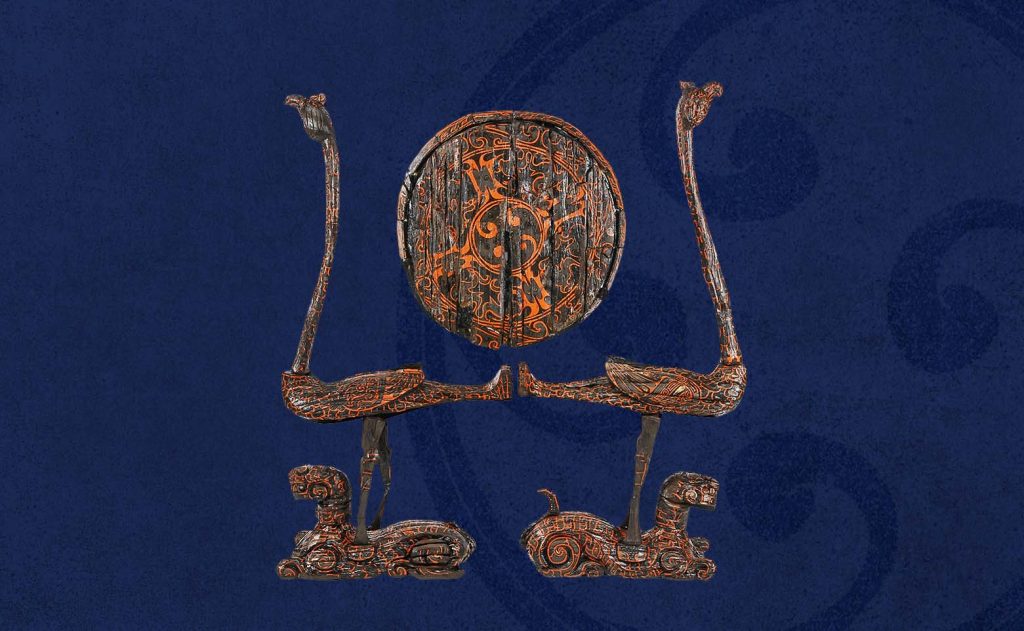
Painted xuangu drum with a pedestal design of phoenixes on tigers’ backs, c. 400–300 BCE(approximately 2,300–2,400 years ago)
This standing drum, supported on a pedestal formed by two phoenixes standing on the backs of two tigers, is one of the most iconic Chu instruments. It is one of the few surviving drums of its kind to retain its detailed red and black geometric patterns. Loan courtesy of the Xiangyang Museum
Bronze chime in animal form, c. 1300–1100 BCE(approximately 3,100–3,300 years ago)
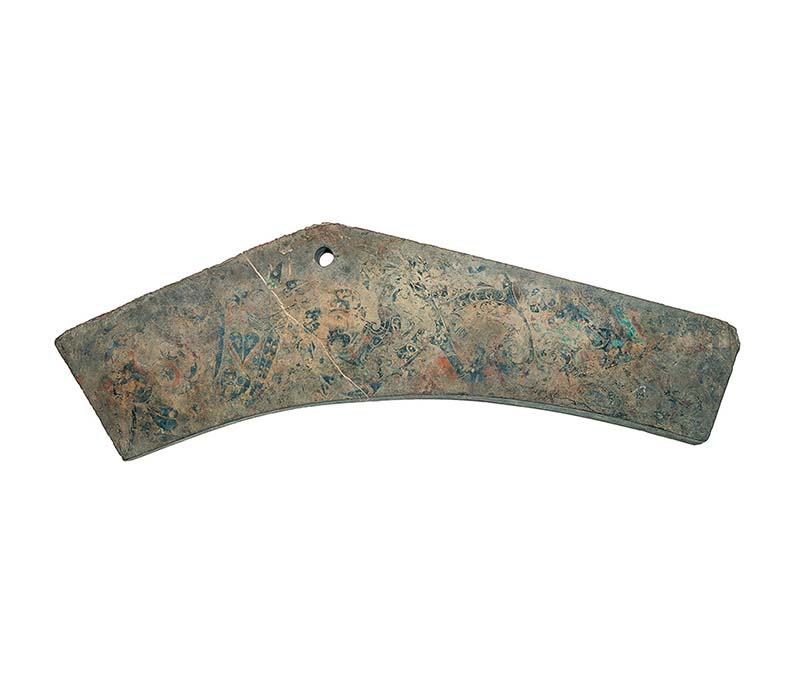
Late Shang dynasty Most chimes were carved from stone; bronze examples are exceptionally rare, and only four have survived. This remarkable specimen is said to produce multiple distinct tones, revealing the extraordinary acoustic sophistication of this early instrument. Loan courtesy of the Changyang Museum
Stone chime with phoenix pattern, 475–221 BCE(approximately 2,250–2,500 years ago)
Warring States period This painted stone chime is part of one of the most ornate sets of stone chimes ever discovered. Though much of the color has faded over time, some of the chime’s painting of phoenixes, done in a striking Chu style, is still visible. Loan courtesy of the Hubei Provincial Museum
“Order of the Qin King” bell, c. 550–450 BCE(approximately 2,500–2,600 years ago)
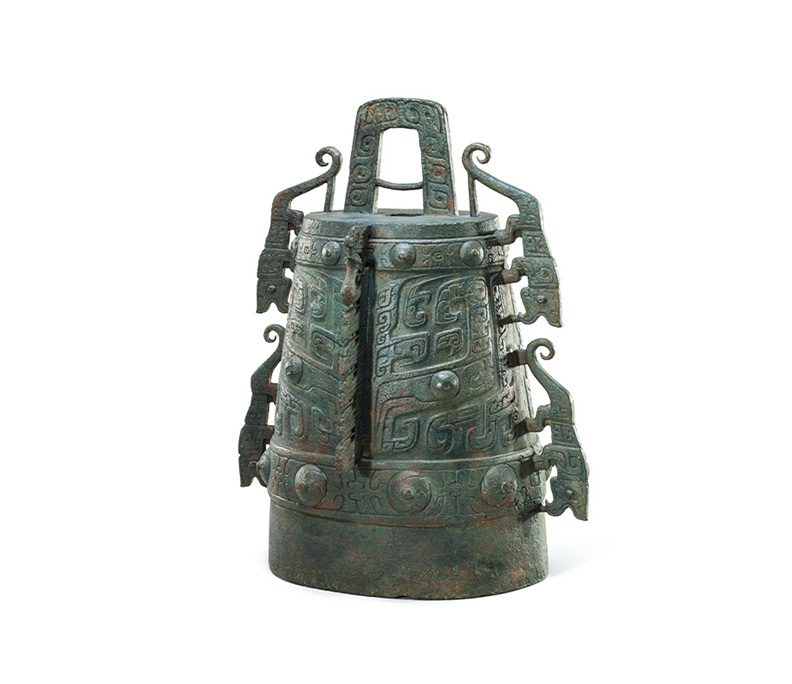
Late Spring and Autumn or early Warring States period This bell offers a rare window into the early history of the Qin state, centuries before its rise to imperial power. Featuring intricate embellishments, it exemplifies the technical precision and artistic sophistication of bronze craftsmanship. Loan courtesy of the Yichang Museum
Bo bell of Marquis Kang of Zeng, c. 1000 BCE(approximately 3,000 years ago)
Early Western Zhou period This impressive bo comes from the first known set of bells capable of producing all four principal tones used in early Zhou court music, suggesting Zeng’s advanced musical and bronze casting practices. Its ornamentation features phoenix, cloud, and animal mask motifs and flattened flanges formed as pairs of tigers. Loan courtesy of the Suizhou Museum
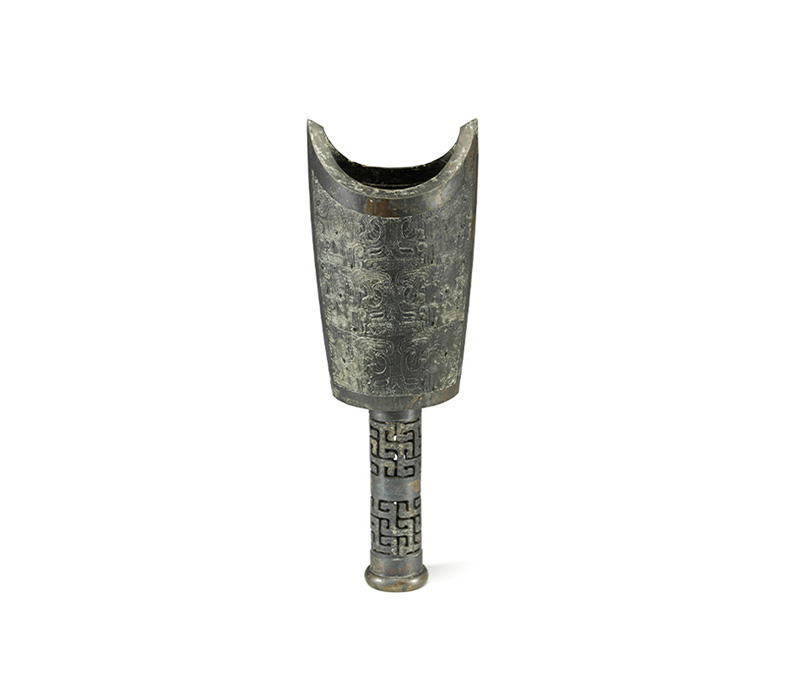
Nao bell, c. 316 BCE (approximately 2,350 years ago)
Middle Warring States period This finely cast bell was unearthed from a tomb of a Chu noble. Its exterior and interior surfaces are richly cast with stylized dragon motifs, and its handle is adorned with a design of continuously interlocking scrolls. Loan courtesy of the Hubei Provincial Museum
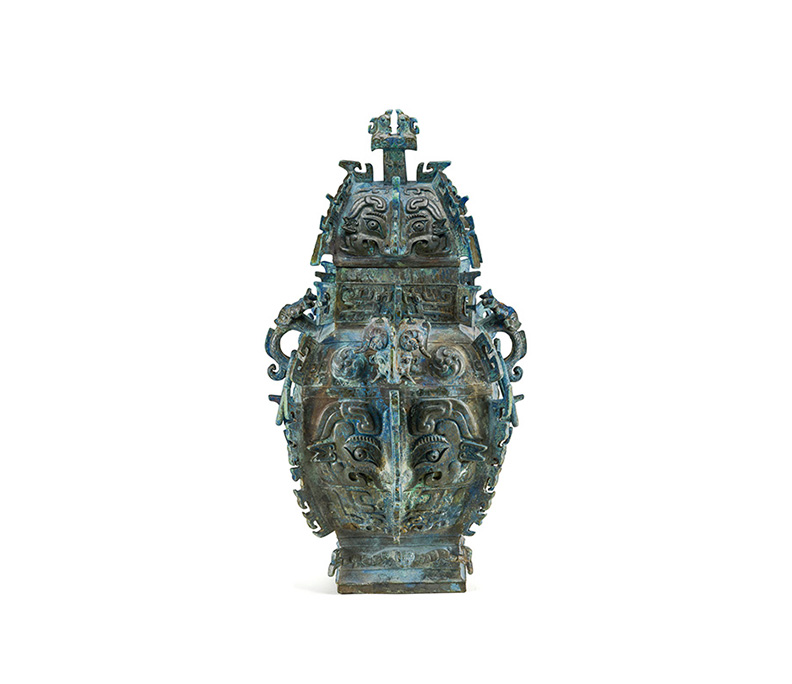
Fanglei wine vessel of the Marquis of E, c. 1000–900 BCE(approximately 2,900–3,000 years ago)

Early Western Zhou period In ancient Chinese ritual ceremonies, musical instruments were paired with ritual vessels that held food and wine. This wine vessel represents the pinnacle of E bronzeware during the Western Zhou period. Its silhouette is enlivened by hooked appendages, and the knob of the lid is capped by a pair of birds. Loan courtesy of the Suizhou Museum
The Magical Flute: Beauty, Enchantment, and Power catalog is available for purchase at the Museum Store or online at theMIMstore.org.
Organized by
Under the guidance of the National Cultural Heritage Administration of China
Selected as a 2026 “Project for the Bridge of Civilization: Premier Overseas Exhibitions of Chinese Cultural Relics” by the National Cultural Heritage Administration of China
Start Planning Your Visit
Thank You to Our Generous Donors
Presenting Sponsor
The Arnold Simonsen Family Charitable Foundation, Inc.
Sponsored by
John & Joan D’Addario Foundation
Jerry & Jo Ellen Preradovic
Scott & Catherine Roberts
Supported by
Babette & Richard Burns
John & Pamela Stransky
Hao and Michelle Wang Foundation
Additional Support by
Anonymous
Elizabeth Biaett & Gary Dickey
Michael & Susan Hooley
June S. & Leslie M. Lewis