

More than 100 remarkable flutes from the dawn of music to the present day
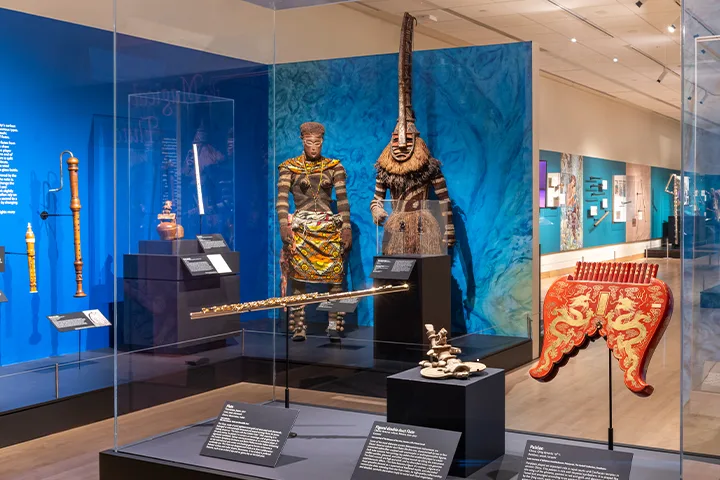
On November 7, MIM opened its newest special exhibition, The Magical Flute: Beauty, Enchantment, and Power, in the Target Gallery. The exhibition celebrates the resounding influence of the world’s first wind instrument on cultures from around the world. More than 100 remarkable flutes from the dawn of music to the present day explore the many ways in which people throughout history have used flutes of all forms, designs, and sizes to express the rich human experience.
The flute has existed since the earliest days of civilization. Archaeological examples of ancient flutes in the exhibition include a rare yue from the Xinglongwa culture of Neolithic China, which existed approximately 8,000 years ago, and a notched bone flute from the Paracas people of the Andes that is more than 2,000 years old. These instruments offer evidence that music has been part of life for millennia.
Cultures around the world developed an extraordinary variety of flutes over thousands of years. Many of the flute’s striking forms—including Western orchestral flutes, end-blown flutes such as the shakuhachi, recorders, panpipes, ocarinas, whistles, and more—are represented by superlative examples in The Magical Flute. So, too, is a wide range of sizes, from two-inch-tall hunters’ flutes from Cameroon to a seven-foot-long uruá double flute from the Amazon. Especially fine examples on display include richly decorated ceramic and bone panpipes from the Nazca people of Peru and a stunning paixiao panpipe from China’s Qing dynasty. Flutes by influential makers are featured as well. Three Western orchestral flutes made by Theobald Boehm—perhaps the most important flute maker in European history—show the development of his key systems, which became the foundation of modern keyed woodwinds.

Left: Guests look at a display of African hunters’ whistles and flutes. Right: A wabi flute from Papua New Guinea, Native American flutes, and performance regalia from flutist R. Carlos Nakai
The special exhibition’s themes of beauty, enchantment, and power are embodied in astonishing instruments owned by virtuosos and historic figures. One such highlight is an 18-karat gold flute encrusted with diamonds that was formerly owned by internationally renowned Northern Irish classical flutist Sir James Galway, known as “the Man with the Golden Flute.” Other outstanding flutes on display include Japanese emperor Go-Daigo’s beautifully decorated hitoyogiri and three superb glass flutes by innovative French maker Claude Laurent, one of which was owned by Napoleon Bonaparte and another (below) by his brother Louis, who was king of Holland.
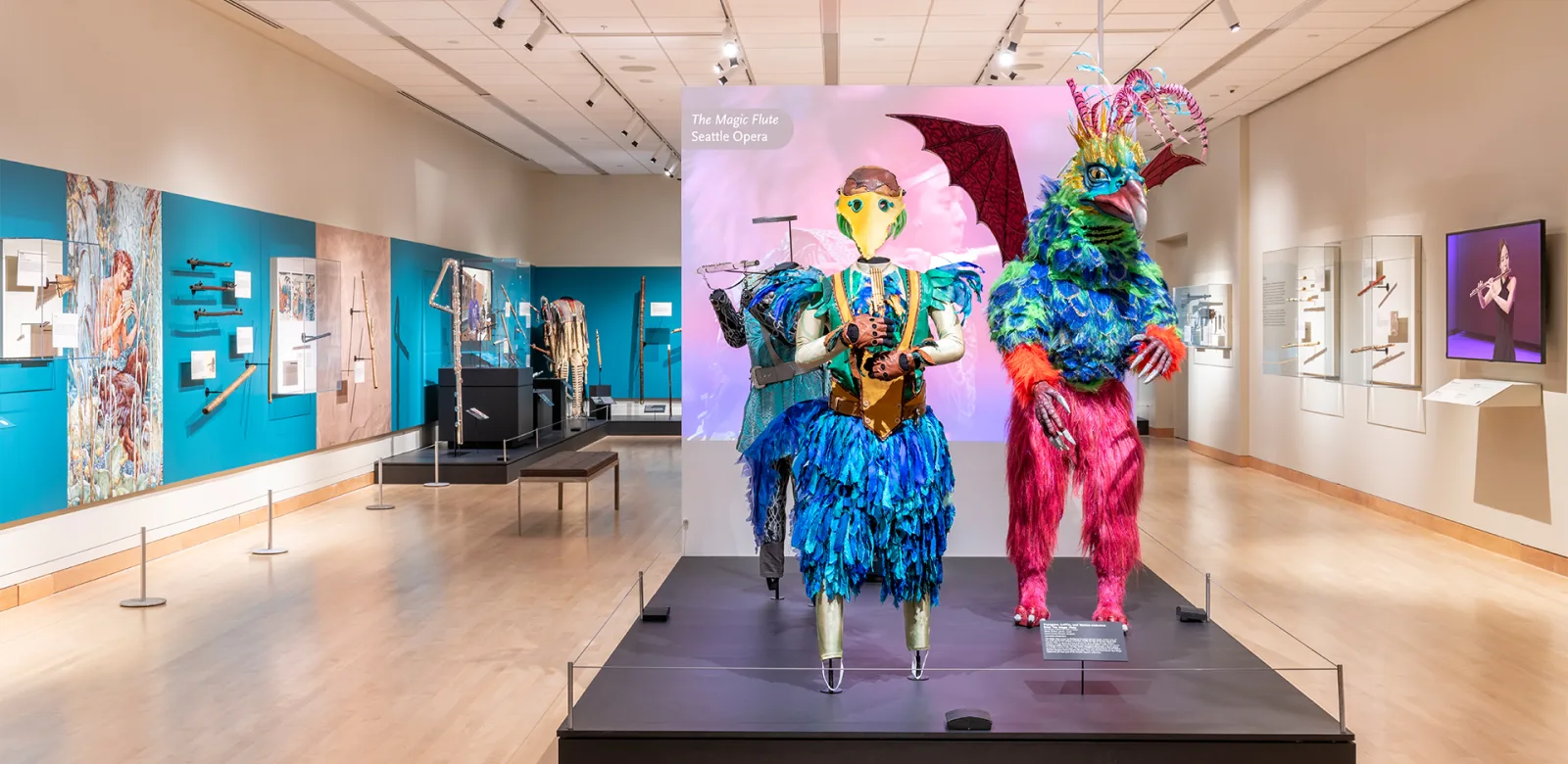
The instruments are complemented by traditional clothing and ceremonial regalia that contextualize how flutes have been used to shape cultural identities and convey status, including a suit of samurai armor and a miyogiri from Japan’s Edo period that share a butterfly crest associated with a notable samurai clan. Stage costumes for acclaimed productions of Mozart’s opera The Magic Flute—three by British fashion designer Dame Zandra Rhodes and one by modernist painter Marc Chagall—show how the flute has been used to immerse audiences in fantastical stories. Other artworks—such as a pre-Columbian ceramic with a panpipe-playing priest figurine—illuminate how the flute has helped humans transcend the ordinary world.
The exhibition’s audiovisual content showcases the distinctive sounds of many of the flutes on display and emphasizes the artistry of renowned musicians whose instruments are featured, such as Native American flutist R. Carlos Nakai. Commentary from experts, such as flute virtuoso Jasmine Choi, helps explain the flute’s profound impact.
“From the moment we landed on the title The Magical Flute, our imaginations were lit,” says Daniel Piper, curator for Latin America and the Middle East. “It has been exciting to develop this exhibition as a curatorial team. We have come to deeply appreciate, even to love, the distinct characteristics of beauty, power, and human expression that emanate from this exhibition’s astonishing array of flutes from cultures around the world and across millennia.”
We invite you to explore the enduring legacy and emotional resonance of the flute in the Target Gallery. Circle of Friends members at the Song level and higher receive special exhibition passes.

Loan courtesy of Mark Leone
Sponsored by the John & Joan D’Addario Foundation, Mary Ann & John Mangels, and PNC Bank
Supported by Christine Lindley, the Hao and Michelle Wang Foundation, and Jan & David Wood
The exhibition catalog for The Magical Flute: Beauty, Enchantment, and Power is available for $14.95 at the Museum Store or at theMIMstore.org.
Every purchase supports MIM and its programs.