
Presenting Sponsor: The Kemper And Ethel Marley Foundation
The untold story of the invention of the electric guitar
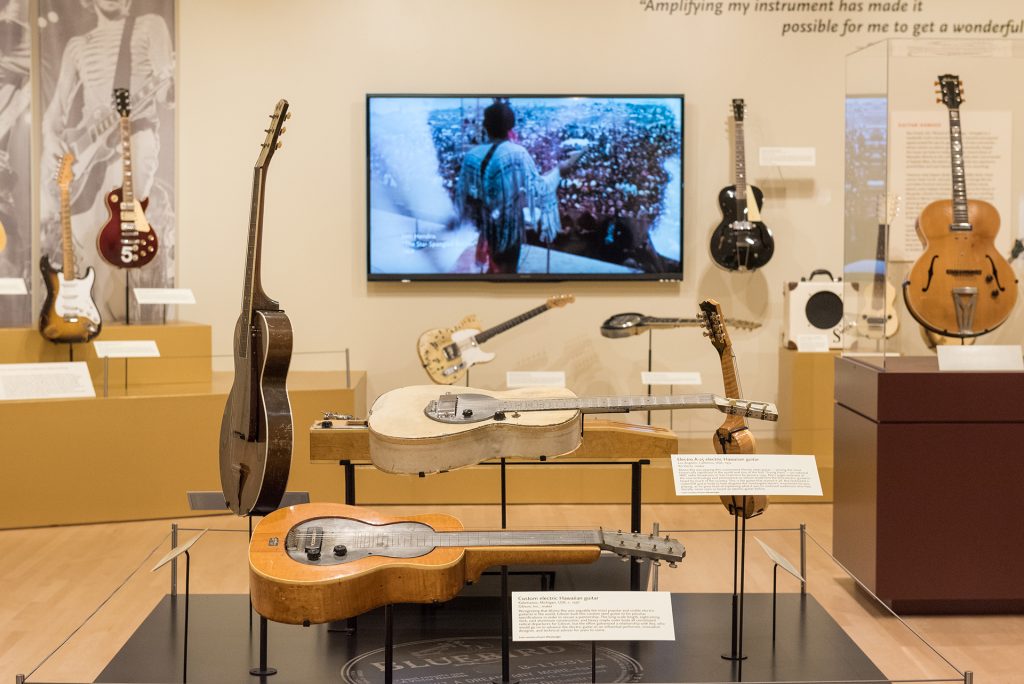
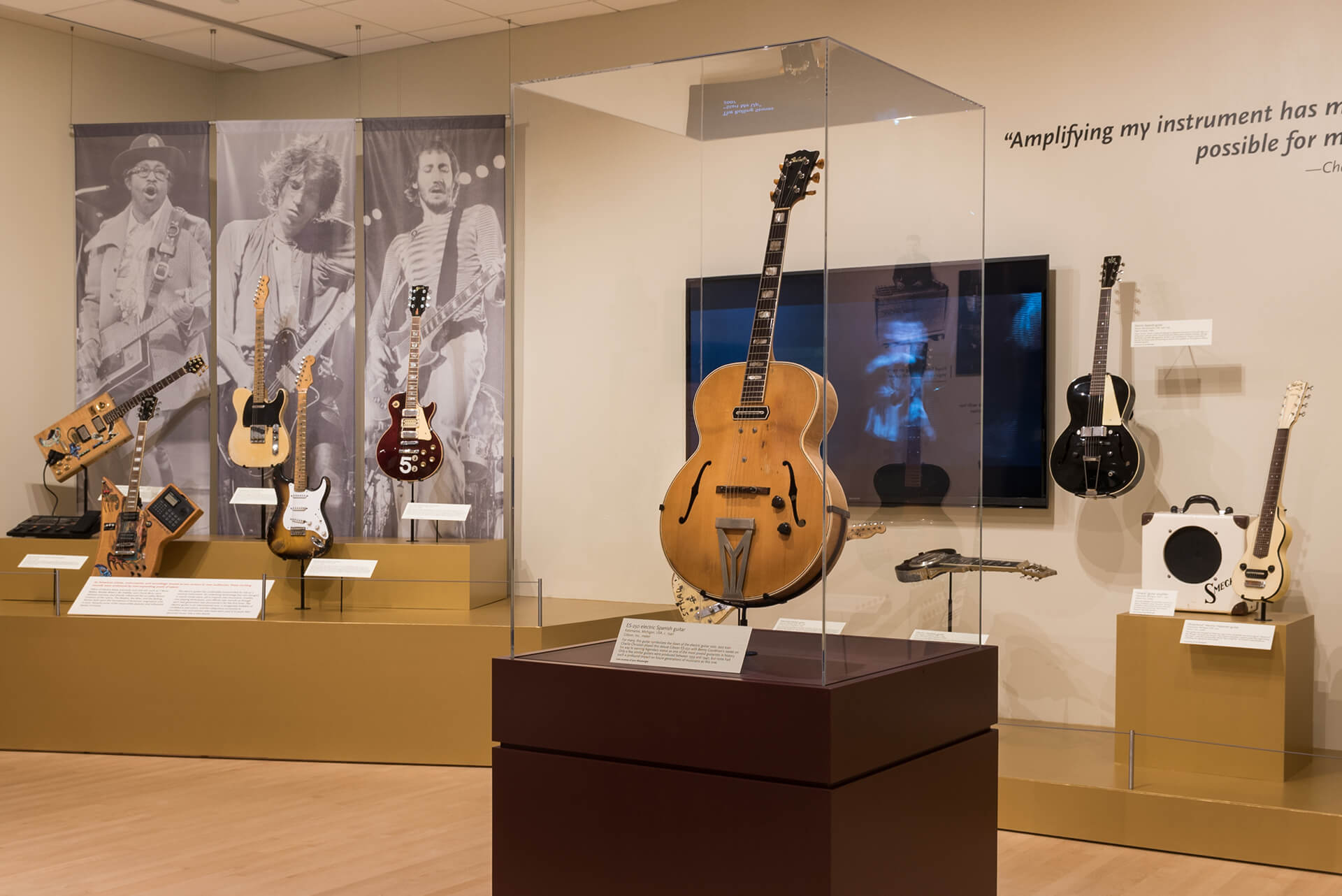
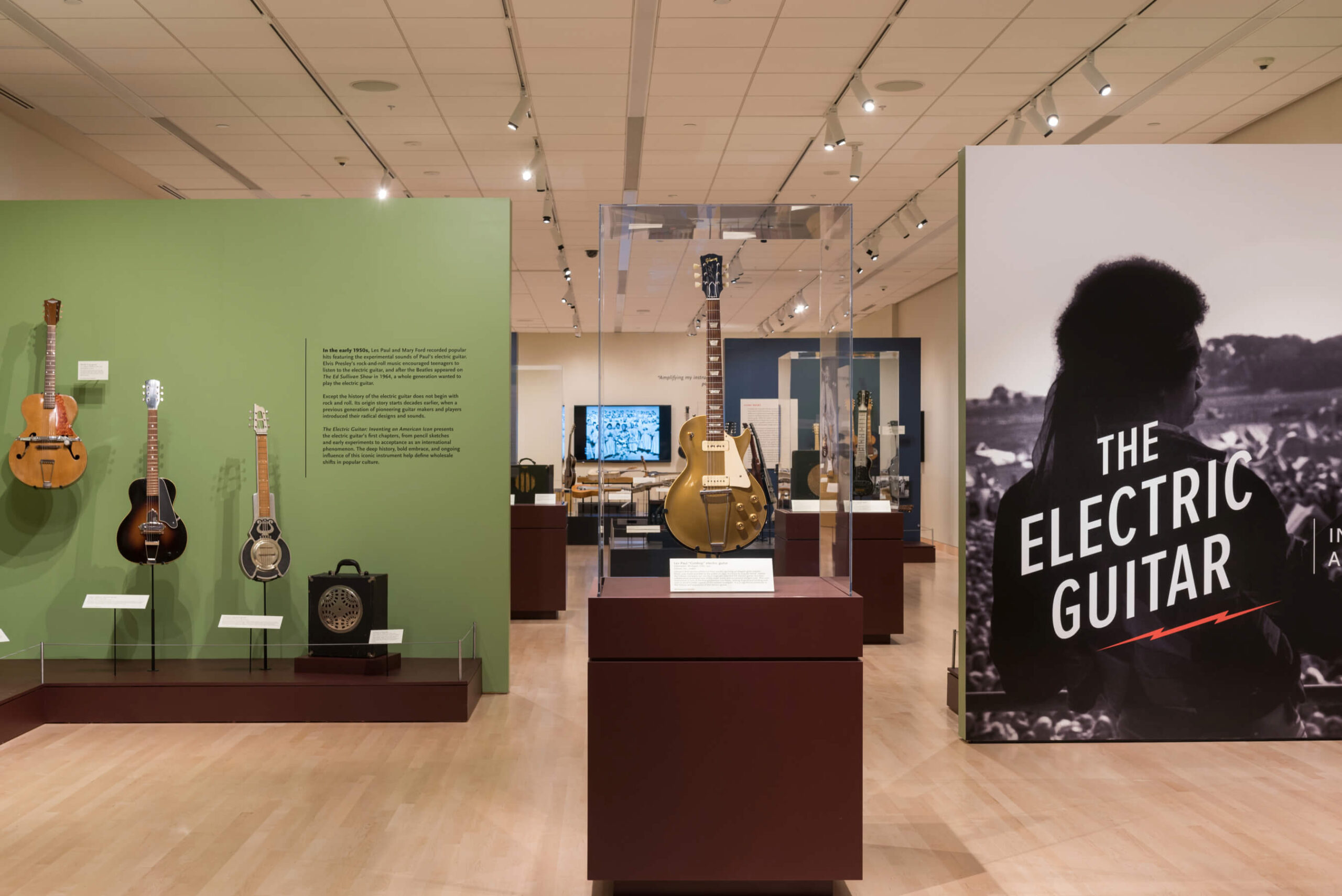
MIM’s special exhibition The Electric Guitar: Inventing an American Icon showcases more than 80 of the rarest electric guitars and amplifiers in the world―from some of the first ever heard to those played by the most famous electric guitarists known today. Decades before rock and roll, these instruments jolted, energized, and even confused the eardrums of the nation.
- November 9, 2018–September 15, 2019
Explore an instrument that revolutionized music and popular culture.
Featuring the Private Collection of Lynn Wheelwright
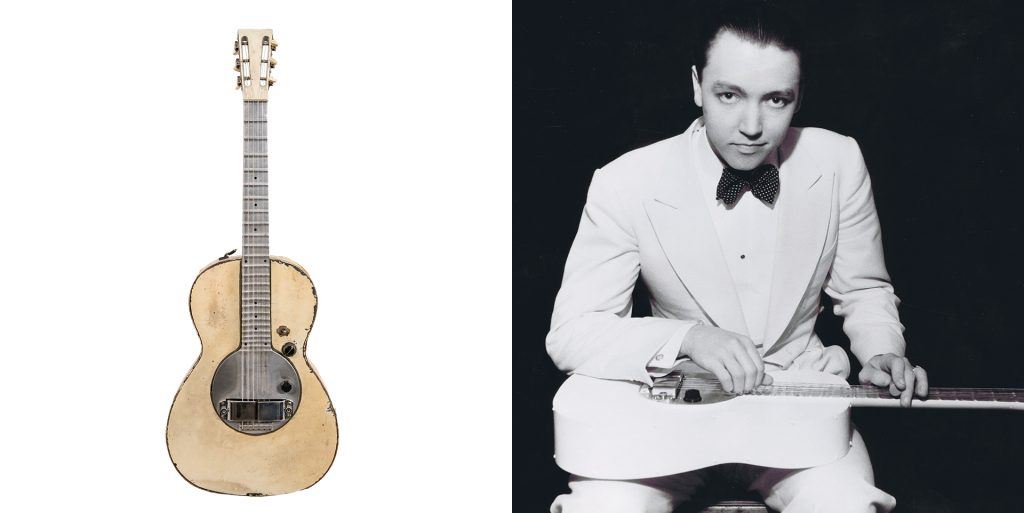
Alvino Rey’s Electro A-25 (1932)
Left: This instrument was likely the first electric guitar played on a national radio broadcast. Its new sound shocked the world, igniting a musical revolution. Right: Alvino Rey, pioneer and champion of the electric guitar, c. 1933. Loan and image courtesy of Lynn Wheelwright
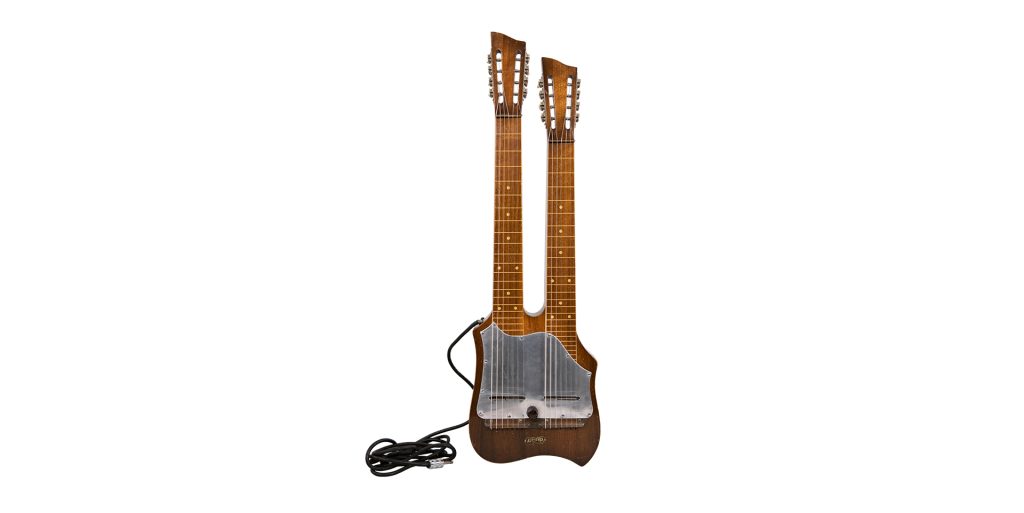
Audiovox Duo 336 double-neck (c. 1936)
Possibly the only known original example of its kind from Paul Tutmarc’s Audiovox company, this guitar had two necks that accommodated specialized tunings for the popular Hawaiian style of steel guitar playing. Loan courtesy of Lynn Wheelwright
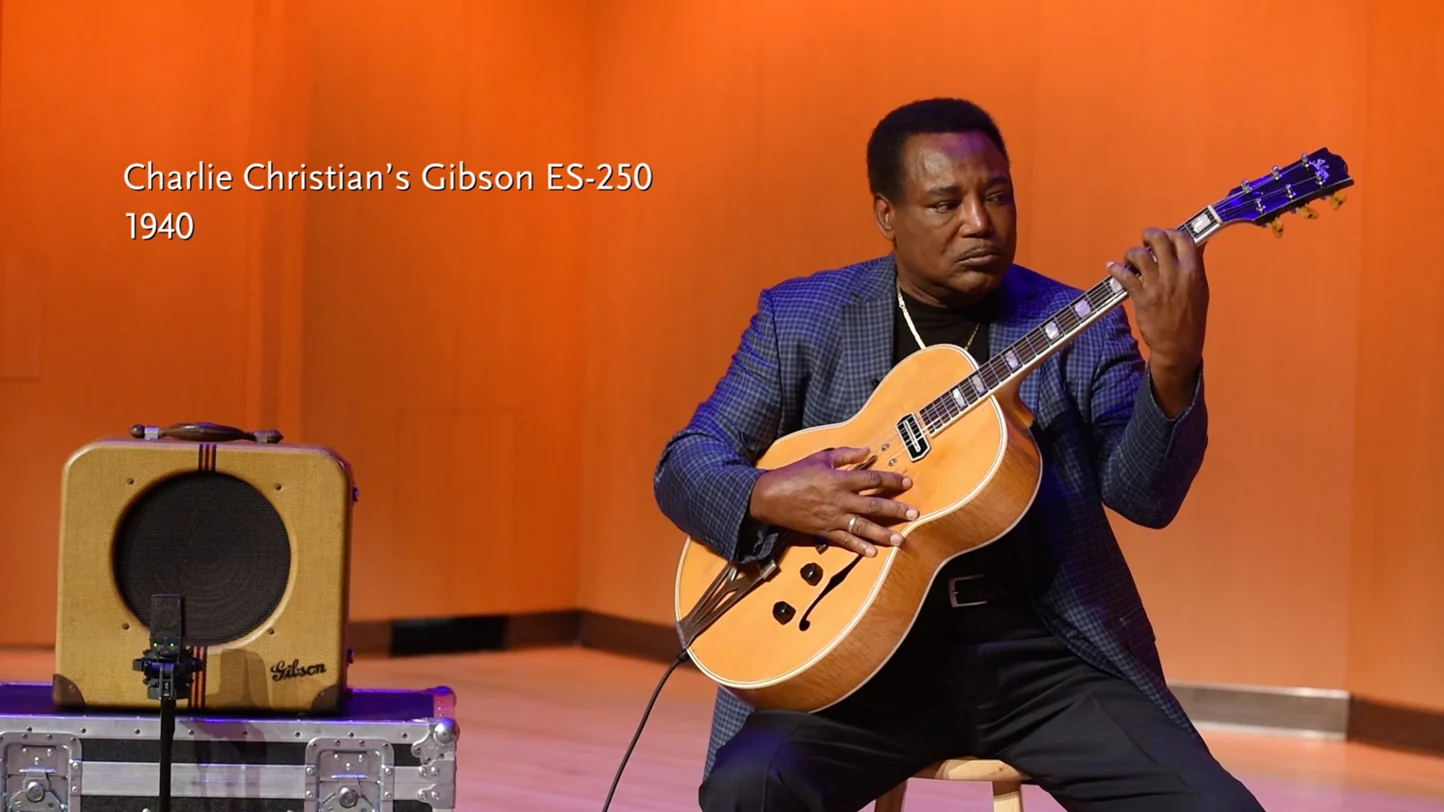
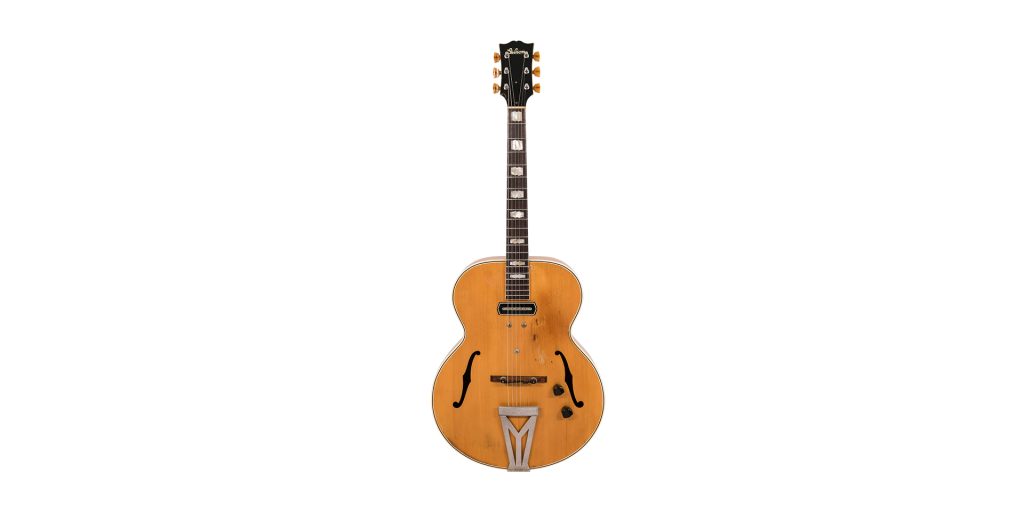
Charlie Christian’s Gibson ES-250 (1940)
Charlie Christian, the acknowledged pioneer of the electric jazz guitar, played this remarkable instrument while a member of Benny Goodman’s sextet. Loan courtesy of Lynn Wheelwright
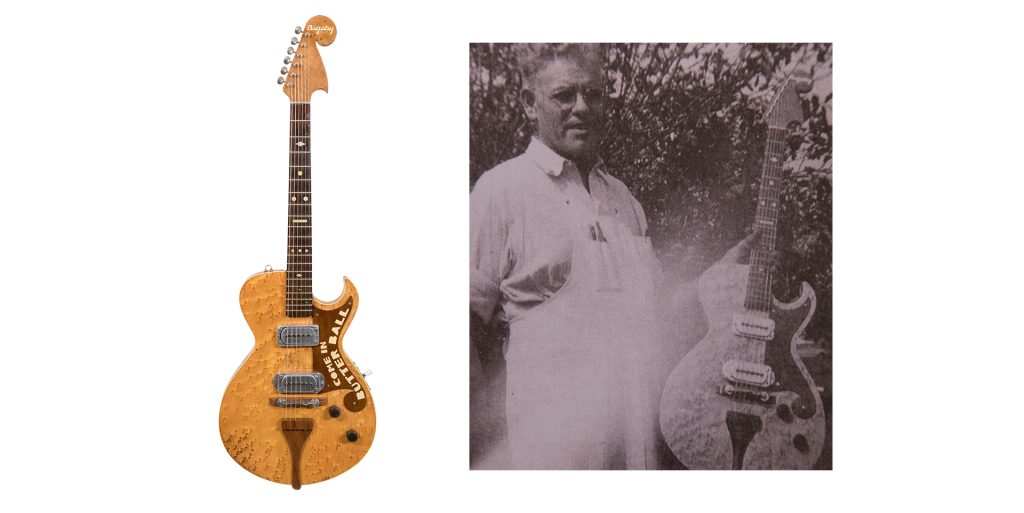
Paul Bigsby “Standard” guitar (1949)
Left: Played by Tommy “Butterball” Paige, lead guitarist for country star Ernest Tubb, this guitar is the third “Standard” solid body by Bigsby and the first to feature two pickups with a selector switch. Right: Visionary luthier Paul Bigsby, pictured with his first dual-pickup “Standard” solid-body guitar, c. 1948. Loan courtesy of Deke Dickerson Photo courtesy Tom Sims Archives
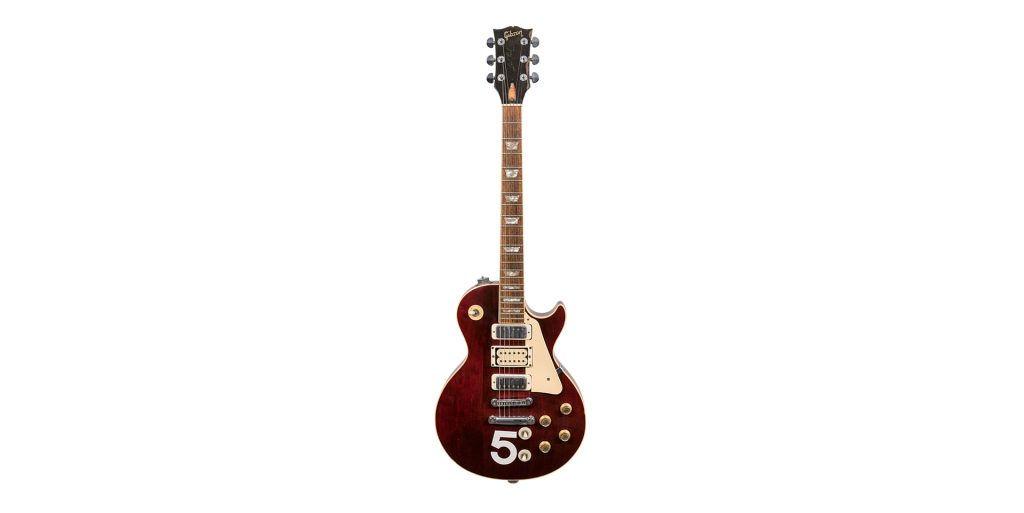
Pete Townshend’s Gibson Les Paul Deluxe (1976)
Featuring modified electronics and marked with a large number “5” for quick identification on stage, this Les Paul was a staple of the Who’s live performances in the late 1970s. Loan courtesy of Brad and Diana Rodgers
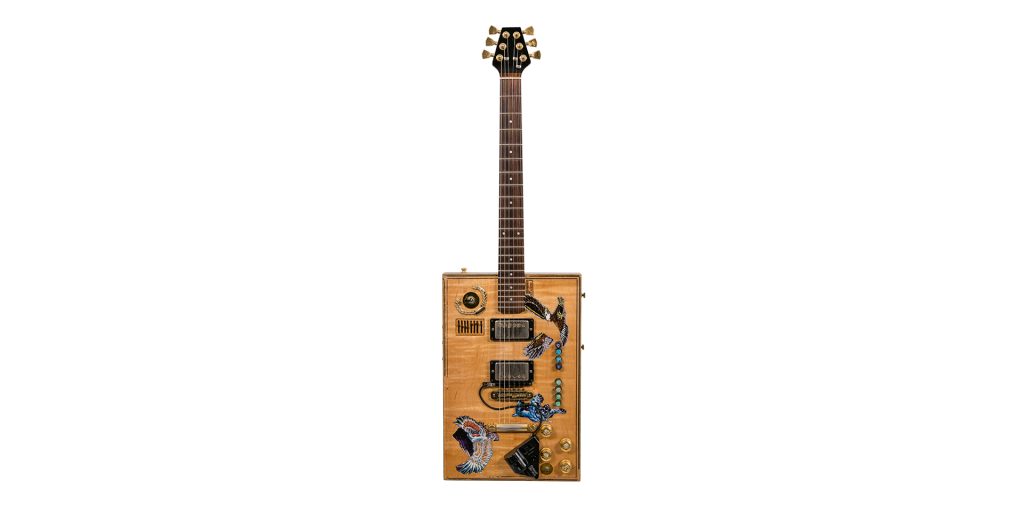
Bo Diddley’s “The Bad Dude” (1998)
Designed and played by rock and roll originator Bo Diddley late in his life, this electric guitar features the artist’s signature rectangular body as well as onboard electronic effects and a synthesizer pickup. Loan courtesy of Charlie Tona
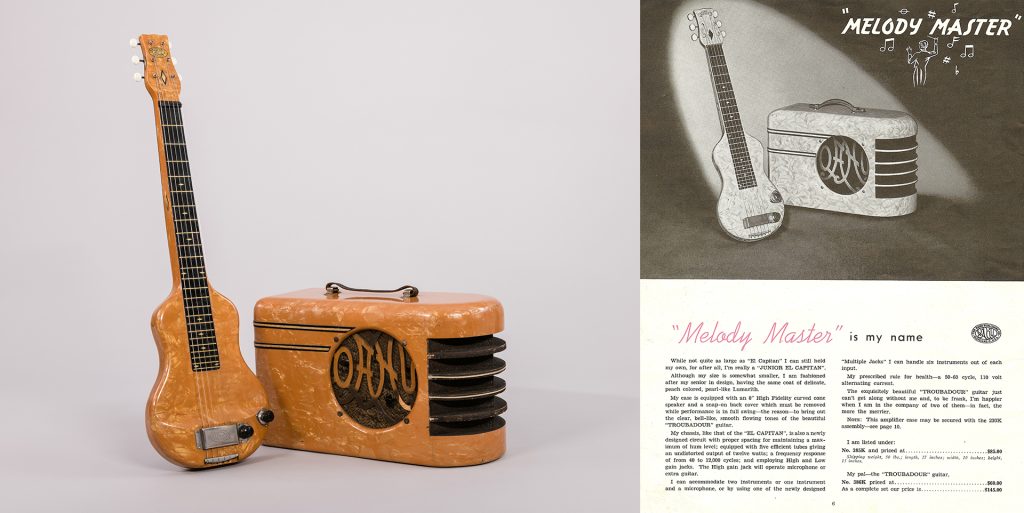
“Troubadour” electric Hawaiian guitar (1940)
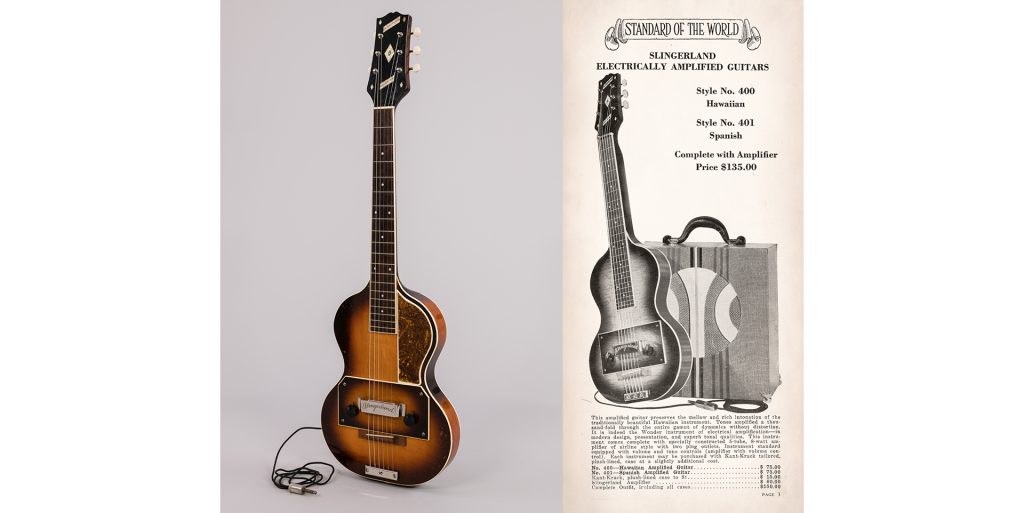
Left: Offered as a matched set with the 12-watt “Melody Master” amplifier, this affordable package was primarily aimed at beginner steel guitarists. Right: An original advertisement for the guitar-and-amp combo lists the set for $145. Loan and image courtesy of Lynn Wheelwright
Slingerland No. 401 Songster guitar (1936)
Left: Built by a company famous for its drums, this was the first solid-body wooden electric Spanish guitar. It features neck-through construction and a sophisticated hum-canceling pickup. Right: The original advertisement lists the complete outfit—guitar, amplifier, and case—for $150. Loan and image courtesy of Lynn Wheelwright
Inside the Exhibition
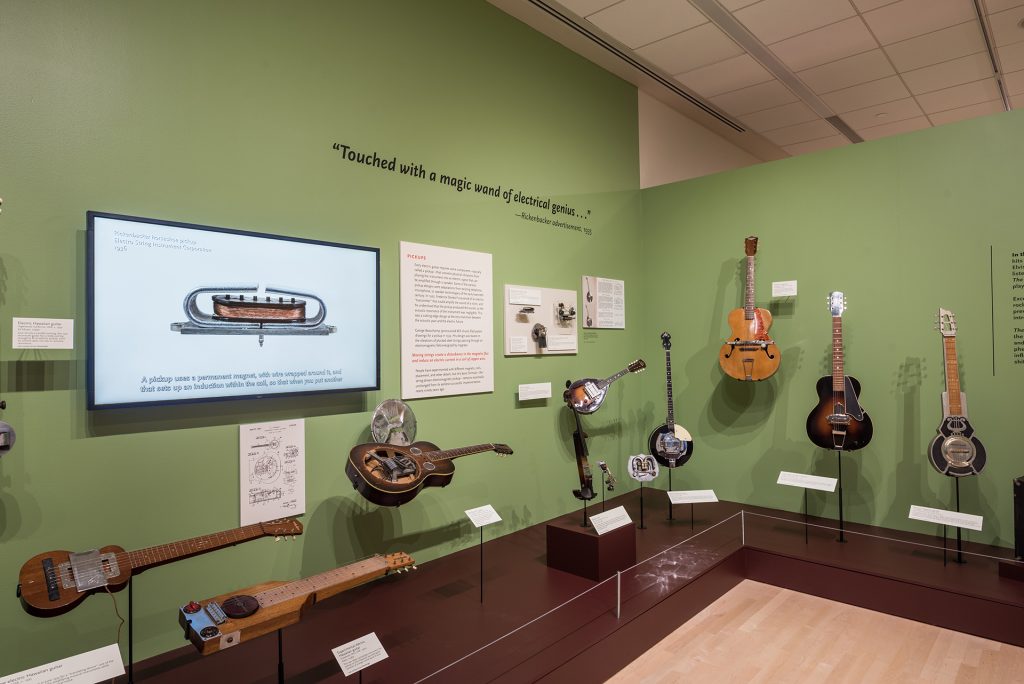
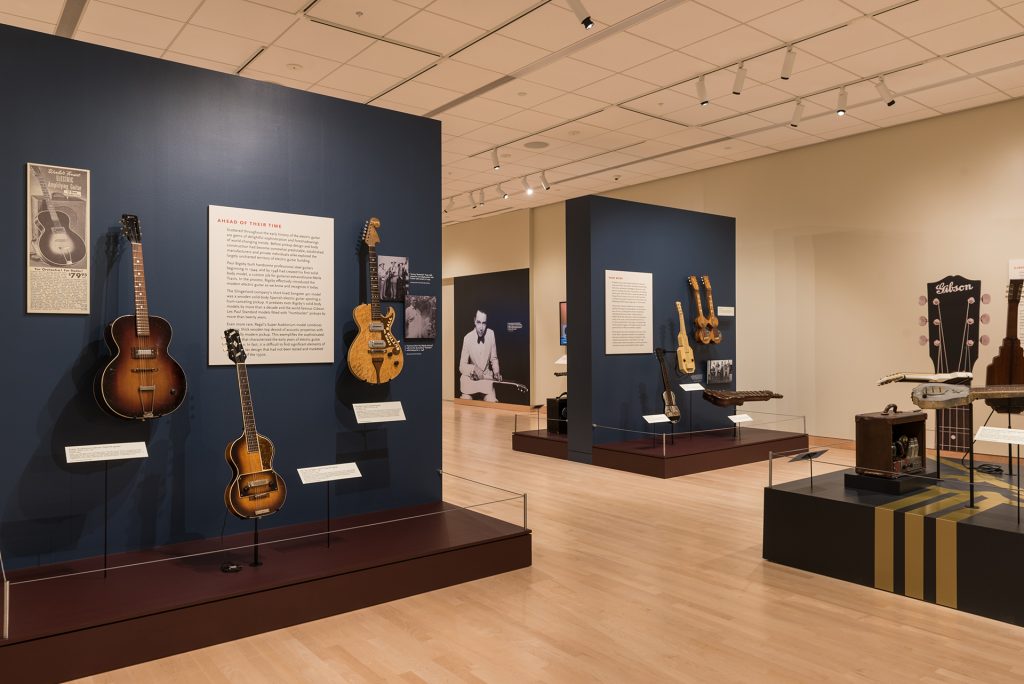

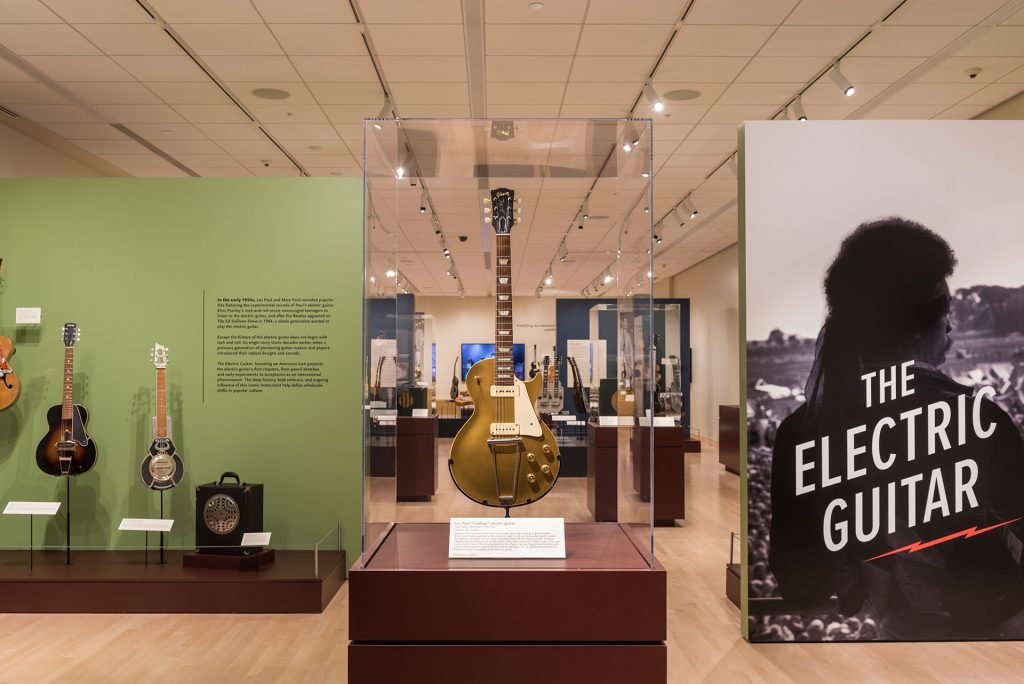
Learn more about the invention of an American icon with MIM’s special exhibition catalog, available for purchase at the Museum Store or online at theMIMstore.org.
Thank you to our generous donors
Presenting sponsor The Kemper and Ethel Marley Foundation
Supported by
John & Joan D’Addario Foundation,
Sanderson Lincoln, and U.S. Bank
Supported by
Lorraine L. Calbow, Angelo & Micheline Addona, Elizabeth Biaett & Gary Dickey, Babette & Richard Burns, Joe & Elizabeth Chan, Bruce Covill & Lucia Renshaw, Carolyn & John Friedman, Michael & Susan Hooley, Mary Ann & John Mangels, Ann Phillips, Jan & David Wood, and Eugenie C. Trotter & Jack E. Watson
Video Spotlights
The Electric Guitar: MIM’s Telly Award–Winning Documentary