

Bronze instruments show how traditions are preserved and honored across millennia

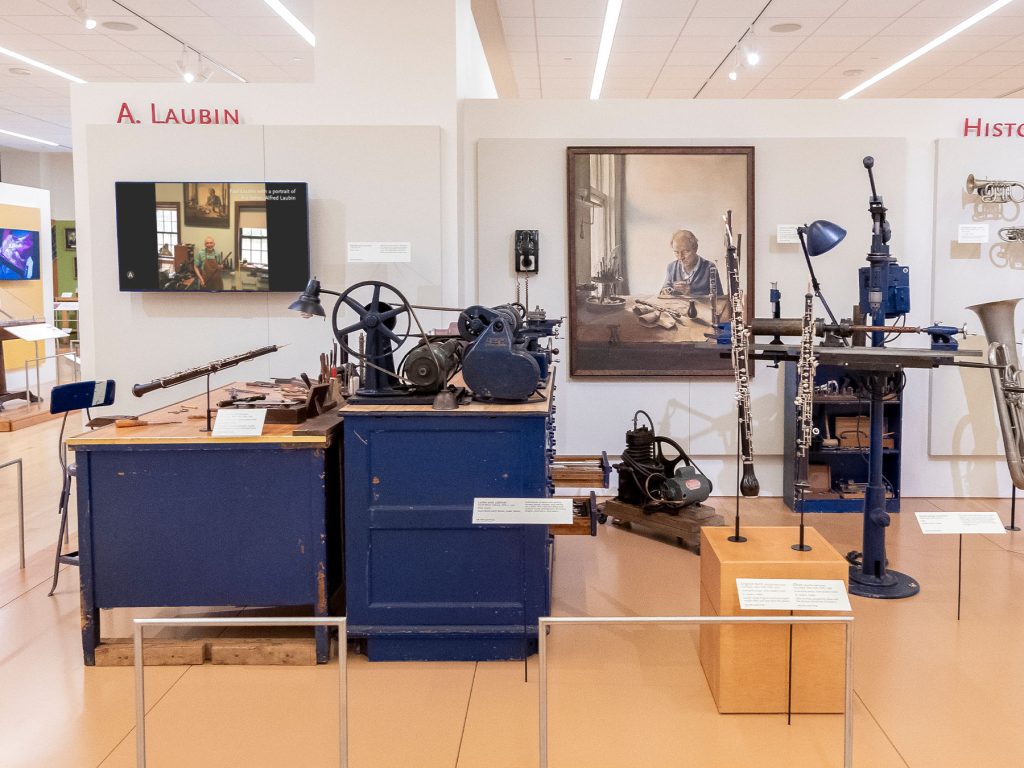
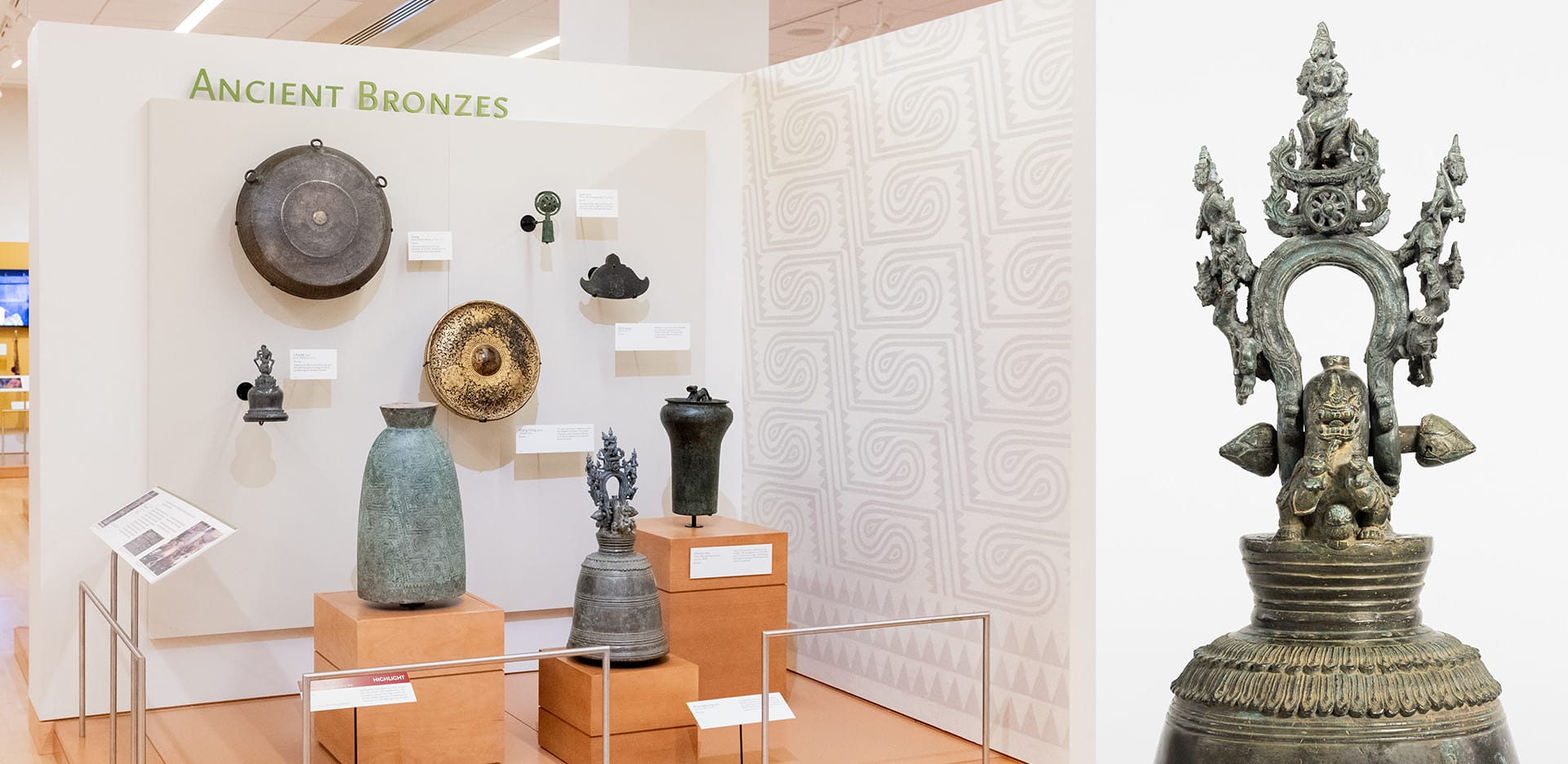
MIM’s Ancient Bronzes exhibit.
Ancient Bronzes, the newest exhibit in MIM’s Asia Gallery, presents eight exciting newly acquired historical bronze bells and gongs from Cambodia, Burma, Indonesia, Thailand, and China. Representing multiple cultures across thousands of years, these instruments were used during daily activities, combat, and ritual ceremonies.
In ancient Asian cultures, bronze instruments were valued for their distinctive sounds and striking beauty. Some of these instruments endure today, providing contemporary observers with a glimpse into musical traditions and symbolic expressions of people from the distant past.
“These artifacts offer our guests tangible connections to the technological marvels, aesthetic achievements, and artistic creativity of the cultures of Southeast Asia and China,” says Eddie Chia-Hao Hsu, curator for Asia and Oceania. “Bronze bells and gongs represent one of the oldest continuous musical traditions shared by diverse Asian cultures, reflecting their unique significance.”
MIM’s chunyu bell is thousands of years old, dating back to China’s Warring States period between 475 and 221 BCE. It was used with drums to signal troops and transmit commands during warfare. Its handle is cast in the form of a tiger, symbolizing the majesty and vigor of China’s ancient Ba and Shu kingdoms. The luan yoke bell is even older, dating between 1000 and 900 BCE. During the late Shang dynasty, Chinese nobility rode in horse-drawn chariots to travel, hunt, and move around the battlefield. Sets of luan bells attached to each vehicle indicated social status—the more bells there were, the higher the rank of the passenger.
Other ancient bells and gongs were used for religious ceremonies. Between the 7th and 16th centuries, regions of Southeast Asia adopted Hindu and Buddhist beliefs. MIM’s 13th-century Indonesian ghạṇtā bell demonstrates this influence—it would have been played during temple rituals, and it is decorated with a roaring lion, which is associated with the spread of Buddhist beliefs.
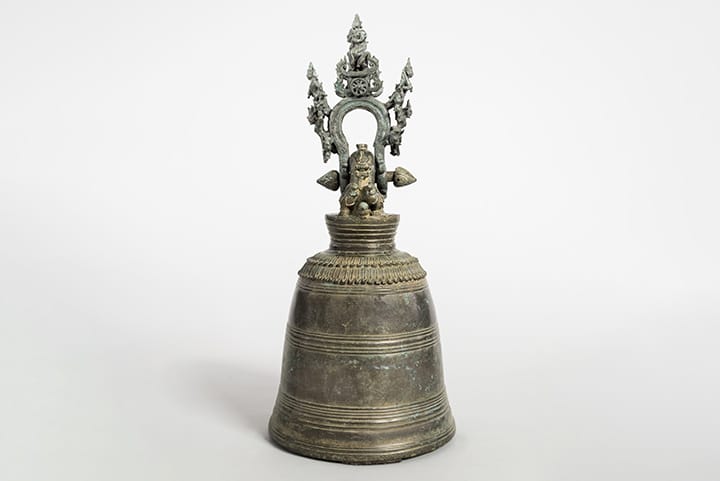
Bronze instruments made in the 19th century show how these religious customs thrived over time. The exhibit’s Burmese khaunglaung bell (below) and Thai khǭng mōng gong, both made during the 19th century, demonstrate the continued legacy of Hinduism and Buddhism in Southeast Asia. The khaunglaung’s ornately cast hanging bracket depicts a scene from the Hindu Ramayana, while its holding ring features stylized Burmese lions. The khǭng mōng is gilded with representations of yaksha, Hindu and Buddhist nature spirits thought to protect worshippers from evil spirits.
Other examples highlight how the techniques and forms of ancient artifacts were preserved across centuries. MIM’s rare molded circular gong from the Karen people, made in the 16th or 17th century, maintains a tradition developed during the 11th century, 500 years or so earlier. The Karen people still play this type of gong in cultural ceremonies today.
“The Ancient Bronzes exhibit highlights the enduring legacy of bronze instrument making across Asia,” Hsu says. “Each piece is imbued with unique symbolism and represents a vital inspiration for artistic creation from ancient times and beyond, inviting us to explore the rich heritage of bronze instruments that has transcended centuries.”
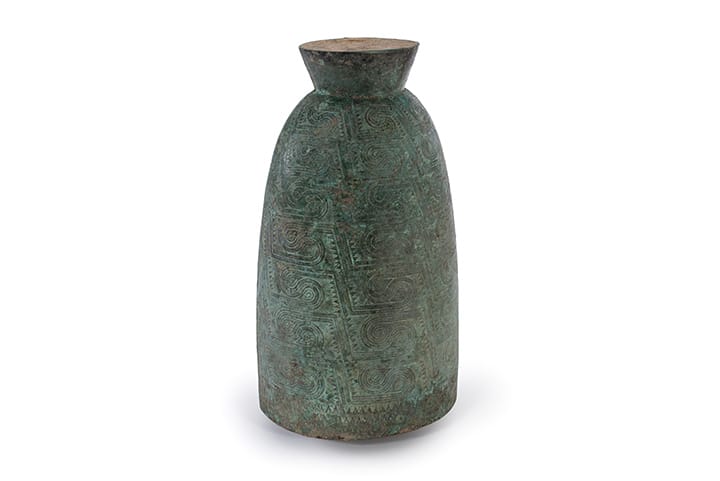
The striking decorative pattern of this bell from the Đông Sơn culture (1000 BCE–100 CE) of Southeast Asia is echoed on the right wall of the Ancient Bronzes exhibit.