

Exhibit gives guests an insider’s view of the Laubin family workshop
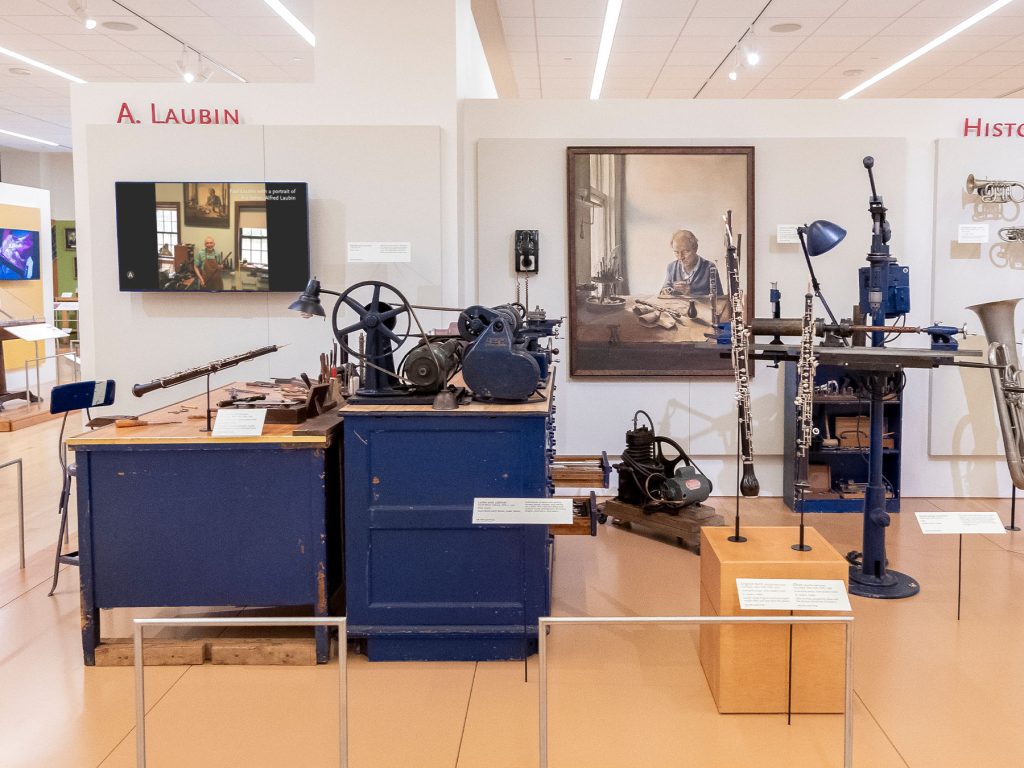
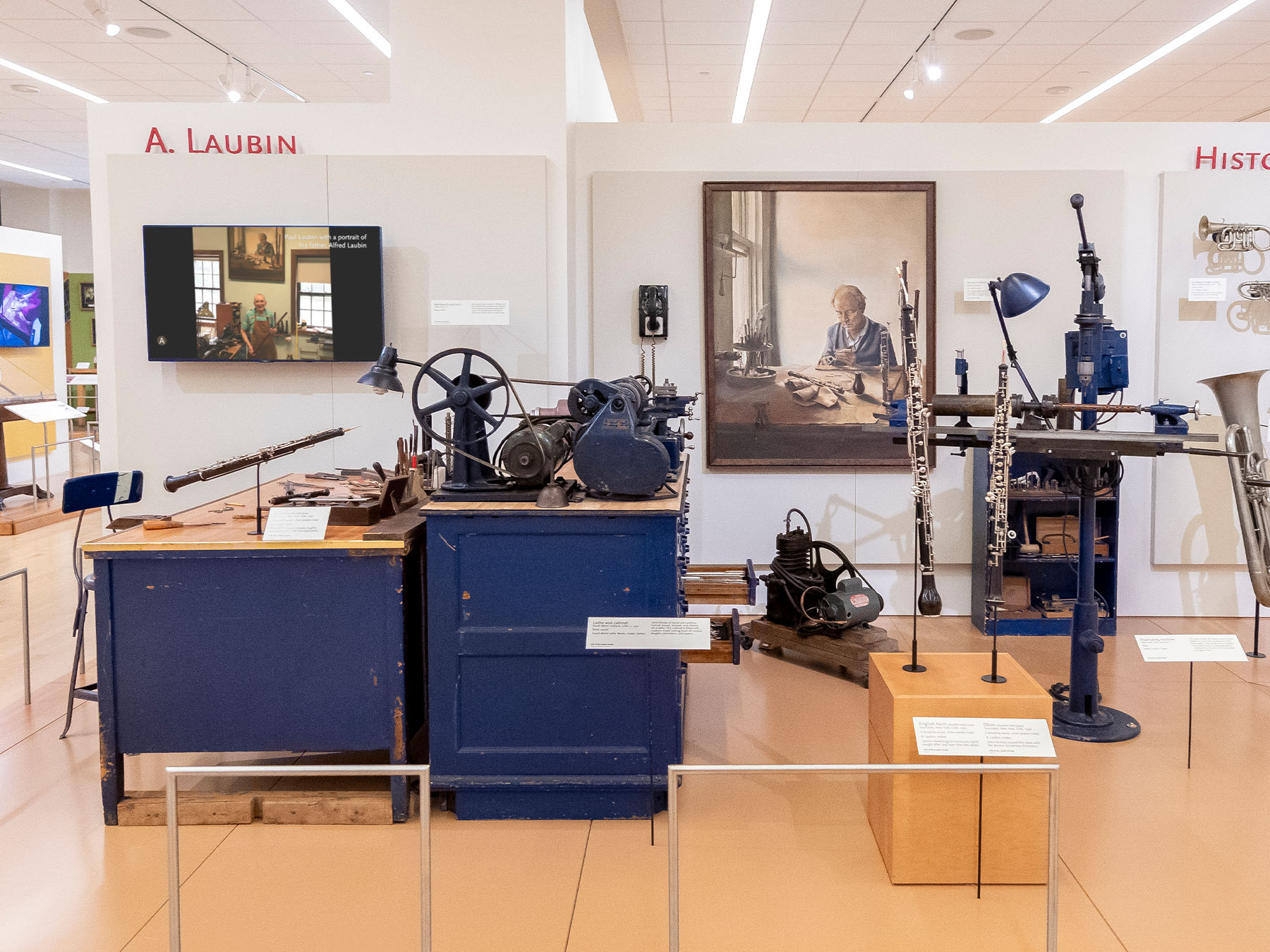
The A. Laubin exhibit in the United States / Canada Gallery includes a workbench, tools, and special equipment used by Alfred and Paul Labin, plus three completed instruments.
Alfred Laubin and his son Paul crafted some of the world’s highest-quality oboes. Thanks to the generous gift of authentic tools and other items from the Laubin family, the new A. Laubin exhibit in MIM’s United States / Canada Gallery offers guests a look at the Laubins’ specialized workshop and three completed Laubin instruments—two oboes and an English horn, which is a tenor oboe.
The oboe is a marvel of engineering, but it is a sensitive instrument. Professional oboist Alfred Laubin resolved to create an oboe of superior stability and sound and made his first oboe in 1931, melting down some of his wife’s silverware to make the keys. Paul Laubin shared his father’s passion for the instrument and began making oboes by the 1950s.
Over the next decades, the Laubins made careful improvements to their design and instrument-making process. Handcrafted Laubin oboes were precisely intonated, responsive to playing dynamics, and more reliable than mass-produced oboes. The Laubins made no compromises in their pursuit of crafting the highest-quality instruments, and their oboes quickly became in demand among serious oboists.
“People have compared playing a Laubin oboe to playing a Stradivarius violin,” says Rich Walter, curator for United States / Canada.
The A. Laubin exhibit offers an intimate view of the workshop where the Laubins made their remarkable instruments. Guests can see the Laubins’ workbench and lathe and the special duplicating machine they developed to help them make their incredibly precise oboes.
“Oboe and English horn players really revere the instruments that came out of that shop, and we are honored to represent the Laubins’ legacy at MIM,” Walter says.